Dispatchable Renewable Industrial Heat with CST + TES

Header image adapted from Colombi et al. (2026).

How can renewable energy supply industrial heat 24/7?

There are several possible configurations. In this article, we focus on one built around a concentrated solar thermal (CST) field, thermal energy storage (TES) and an additional heat source for periods when the solar resource and stored heat are insufficient.

That additional heat can come from a boiler using a renewable fuel, such as biogas or biomass, or from an electric resistance heater or heat pump supplied with renewable electricity. The electric route considered here uses electricity procured through a renewable PPA or backed by Guarantees of Origin (GOs).

On-site PV or wind generation is another option, but we leave it outside this configuration to keep the analysis focused. In particular, on-site PV does not eliminate the need to address periods without sufficient solar resource: PV and CST are both solar-dependent.

The objective is to combine direct solar heat, stored heat and a renewable backup source so that the system can meet the plant’s heat demand continuously without relying on fossil energy.

What Role Does CST Play in Continuous Industrial Heat Supply?

Concentrated solar thermal (CST) uses mirrors to concentrate direct solar radiation onto a receiver, where it is converted into heat. That heat can be supplied to an industrial process without first being converted into electricity.

Depending on the system, CST can produce hot water, pressurized hot water, steam or heat another heat transfer fluid (HTF) used to deliver energy to the process. CST is particularly useful for industrial processes because it supplies heat directly, without first producing electricity.

In the configuration considered here, the solar field supplies heat when sufficient direct solar irradiation is available. Heat can go directly to the industrial process or to thermal energy storage (TES) for later use.

CST supplies direct renewable heat during solar hours and can also contribute heat for later use through TES.

How Does Thermal Storage Extend the Use of Solar Heat?

Thermal energy storage (TES) allows heat produced at one time to be used later. Part of the heat collected by CST during solar hours can supply the industrial process directly, while the rest can be stored.

For continuous industrial processes, TES extends the use of solar energy beyond the hours when the CST field is producing.

Storage capacity determines how much thermal energy can be shifted between hours. Increasing it does not produce additional renewable energy; it changes when that energy can be used. The required capacity depends on the renewable generation available for charging the TES and the plant’s heat demand over time.

TES separates renewable heat production from consumption, allowing stored energy to supply the process when it is needed.

How Is the Remaining Heat Demand Covered?

During periods of lower irradiation, the CST field may still produce useful heat without bringing the HTF to the required process temperature. An additional heat source can provide the remaining temperature lift.

TES can shift solar heat in time, but it cannot create additional energy. A system designed to supply heat continuously therefore needs to account for periods when the combination of current CST production and stored energy cannot meet the required thermal load.

The additional heat source can serve two functions: raise solar-heated HTF to the required process temperature when CST provides only part of the necessary temperature lift, or supply the required heat directly when solar heat is unavailable or insufficient.

If the objective is 100% renewable industrial heat, the energy used for these functions must also come from renewable sources. Two possible routes are a boiler using renewable fuel and an electric  route, with a resistance heater or heat pump using renewable electricity.

Option 1: When Does a Renewable-Fuel Boiler Make Sense?

A boiler can provide the required additional heat using a renewable fuel such as biogas or biomass. It can operate alongside the CST field and TES rather than requiring solar energy to cover every hour of demand.

The amount of fuel required depends on how much of the plant’s heat demand is already covered by direct CST production and stored solar heat. The suitability of the fuel route also depends on fuel availability, cost, existing boiler infrastructure and the characteristics of the industrial process.

Option 2: When Does Renewable Electric Heating Make Sense?

An electric resistance heater or heat pump provides the same additional thermal function through electricity rather than combustion. Both technologies use electricity to supply heat and can raise the temperature of solar-heated HTF to the required process temperature or heat the HTF directly when CST and TES cannot meet the demand.

For this configuration to provide fully renewable heat, the electricity must be supplied as renewable electricity. This can be procured through a renewable PPA or backed by Guarantees of Origin (GOs).

On-site PV or wind could also supply the electric heater or heat pump. We do not consider that configuration further here. On-site PV has a particular limitation for this application because its production is also tied to the solar resource; combining PV with CST does not by itself provide energy during periods without sufficient solar generation. Wind has a different production profile, but its ability to cover the residual demand depends on the site, generation profile and system design.

This power-to-heat route avoids the need to store electricity before using it for thermal demand. The electricity is converted directly into the form of energy the industrial process requires: heat.

How Do CST, TES and Renewable Backup Operate Together?

The operating mix changes throughout the day.

When sufficient solar radiation is available, CST supplies renewable industrial heat directly. Solar heat that is not immediately required can charge the TES.

When CST production falls, stored heat can continue supplying the process. If CST and TES cannot meet the full thermal demand, the renewable backup system supplies the remaining heat. It can also provide the additional temperature lift when CST is producing heat below the required process temperature.

The boiler and electric resistance heater or heat pump are alternative ways of providing this function. Their role in a specific project depends on the selected system architecture rather than on a predetermined operating split.

CST, TES and the additional renewable heat source can therefore be sized and operated as one thermal supply system.

What Determines the Optimal System Configuration?

The capacities of the CST field, TES and additional heat source are defined together.

The plant’s heat demand and required process temperature define how much heat the system needs to supply and when. The solar resource determines the heat available from CST, while the availability and cost of renewable fuel or renewable electricity affect the choice and operation of the additional heat source.

The CST field capacity determines the amount of direct solar heat available and the energy available for storage. TES capacity determines how much heat can be shifted to later hours. The capacity of the boiler or electric heater or heat pump determines how much of the remaining demand it covers and the temperature lift it provides.

The CST field, TES and additional heat source are sized as parts of the same system. Their respective contributions depend on the plant’s heat demand and operating profile, required process temperature, solar resource and the characteristics of the selected backup energy source.

A techno-economic analysis determines the configuration for the plant and compares the renewable-fuel and electric-heating routes where both are technically applicable, taking into account energy costs and available infrastructure.

Process temperature affects CST performance, storage requirements and the capacities needed to reach the required renewable contribution.

The combination is designed so that direct CST heat, stored solar heat and the selected renewable backup source cover the required industrial heat demand.

Sources and references

Renewables as Industrial Development Lever in Fossil Importing Economies

How Does Energy Dependence Affect Industrial Development?

Energy dependence impacts development because it raises the cost and volatility of a fundamental economic input. Fossil fuel importing economies are exposed to global price cycles, exchange rate passthrough, and geopolitical disruption that lie largely outside domestic policy control. This exposure has direct fiscal and macroeconomic consequences.

Energy dependence also shapes productive investment and industrial competitiveness. Energy is a core input for transport, electricity, and thermal energy demand, which remains one of the least decarbonized components of final energy use globally. High and volatile energy costs increase operating uncertainty for industrial activities, particularly in sectors dependent on continuous thermal processes, and can delay long-term capital investment. International Energy Agency (IEA) analysis shows that energy costs are a key determinant of industrial competitiveness, particularly in energy-intensive sectors, where exposure to high and volatile energy prices can influence production location and long-term investment decisions.

International Monetary Fund (IMF) analysis further links fossil fuel import dependence to balance of payments pressure, inflation vulnerability, and reduced macroeconomic resilience, particularly during periods of global price volatility or geopolitical stress. These dynamics are especially binding for countries with limited fiscal space and shallow capital markets, reinforcing constraints on investment conditions.

The United Nations Industrial Development Organization (UNIDO) highlights that energy cost instability disproportionately affects manufacturing sectors, slowing structural transformation and limiting competitiveness in global markets. UNIDO further highlights that access to reliable and affordable energy is closely linked to industrial upgrading and productivity gains, reinforcing its role as a prerequisite for structural transformation.

This evidence links fossil fuel import dependence to greater uncertainty, higher production costs, and constraints on long-term industrial and fiscal planning.

Can the Energy Transition Reduce These Economic Constraints?

The energy transition in industry can reduce some of these external constraints on development.

UNIDO also identifies the energy transition as an opportunity for industrial development, enabling countries to build new capabilities and avoid long-term lock-ins to higher-cost, fossil-dependent systems.

Substituting imported fossil fuels with domestically available renewable energy lowers exposure to global fuel markets and shifts spending from fuel imports toward local investment. Analysis shows that replacing imported fossil fuels in current energy needs with existing renewable energy technologies could reduce net fossil fuel imports by around 70%, representing potential global savings of over USD 1 trillion per year for importing economies.

The International Energy Agency (IEA) similarly finds that renewable energy deployment reduces sensitivity to fuel price shocks, especially in net importing regions. These benefits materialize regardless of a country’s position in fossil fuel markets.

The energy transition can therefore reduce chronic external vulnerabilities without requiring fundamental changes in global fossil fuel markets.

The main constraint is not technological availability. Renewable power and renewable solutions for industrial heat are already deployed across multiple markets and applications; what limits their adoption at scale in developing and emerging economies is the cost of capital, perceived risk, and project bankability rather than technical feasibility.

Where Is the Opportunity for Domestic Renewable Energy Greatest?

Fossil fuels are concentrated in a limited number of countries, while renewable resources, particularly solar, are widely distributed.

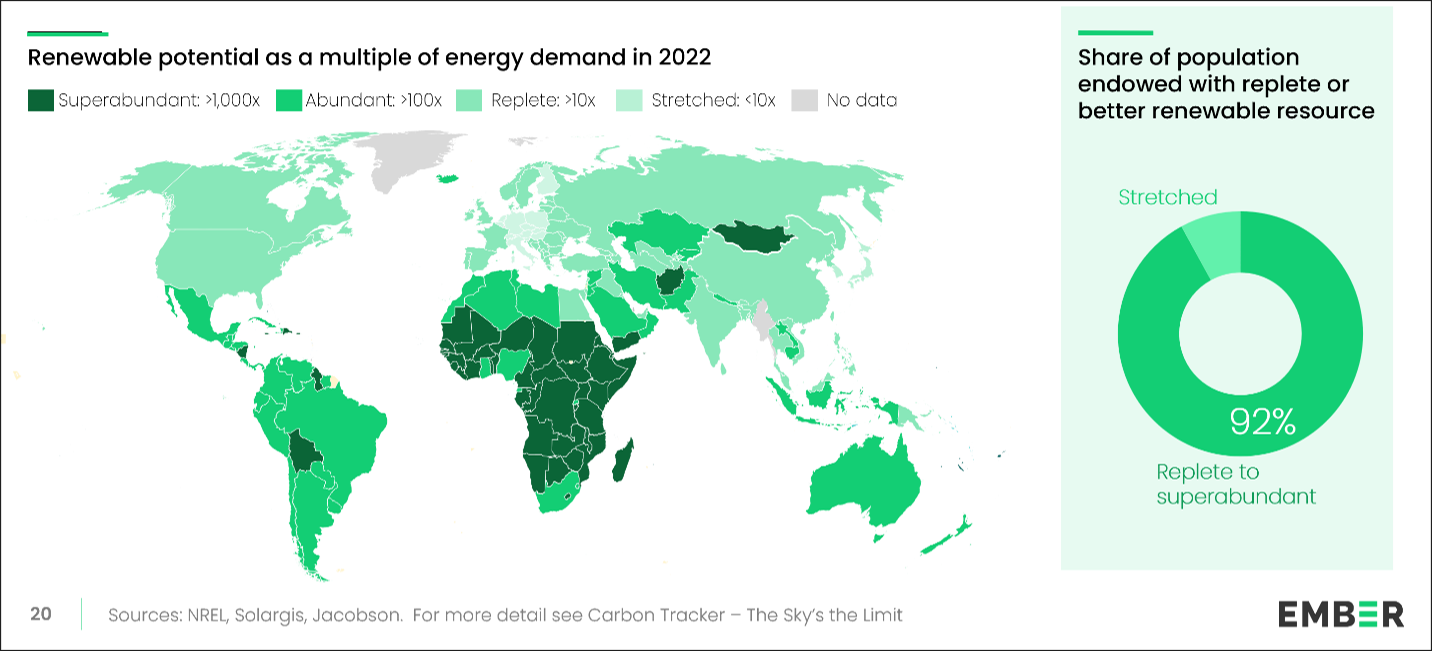
Analysis shows that 92% of the world’s population lives in countries with renewable resource potential exceeding ten times their current energy demand, meaning that, in principle, they could cover both present and future energy needs domestically.

Figure 1: Renewable Energy Potential Relative to National Energy Demand (2022)

Many economies across Africa, Latin America, and parts of Asia fall into this category: high reliance on imported fuels for electricity, transport, and thermal energy use, coupled with strong solar resource availability. Independent datasets corroborate this mismatch between renewable endowment and current energy mix, indicating that underutilization is driven more by financing and institutional constraints than by physical limits.

What Role Can Concentrated Solar Thermal (CST) Play in Reducing Fossil Fuel Dependence?

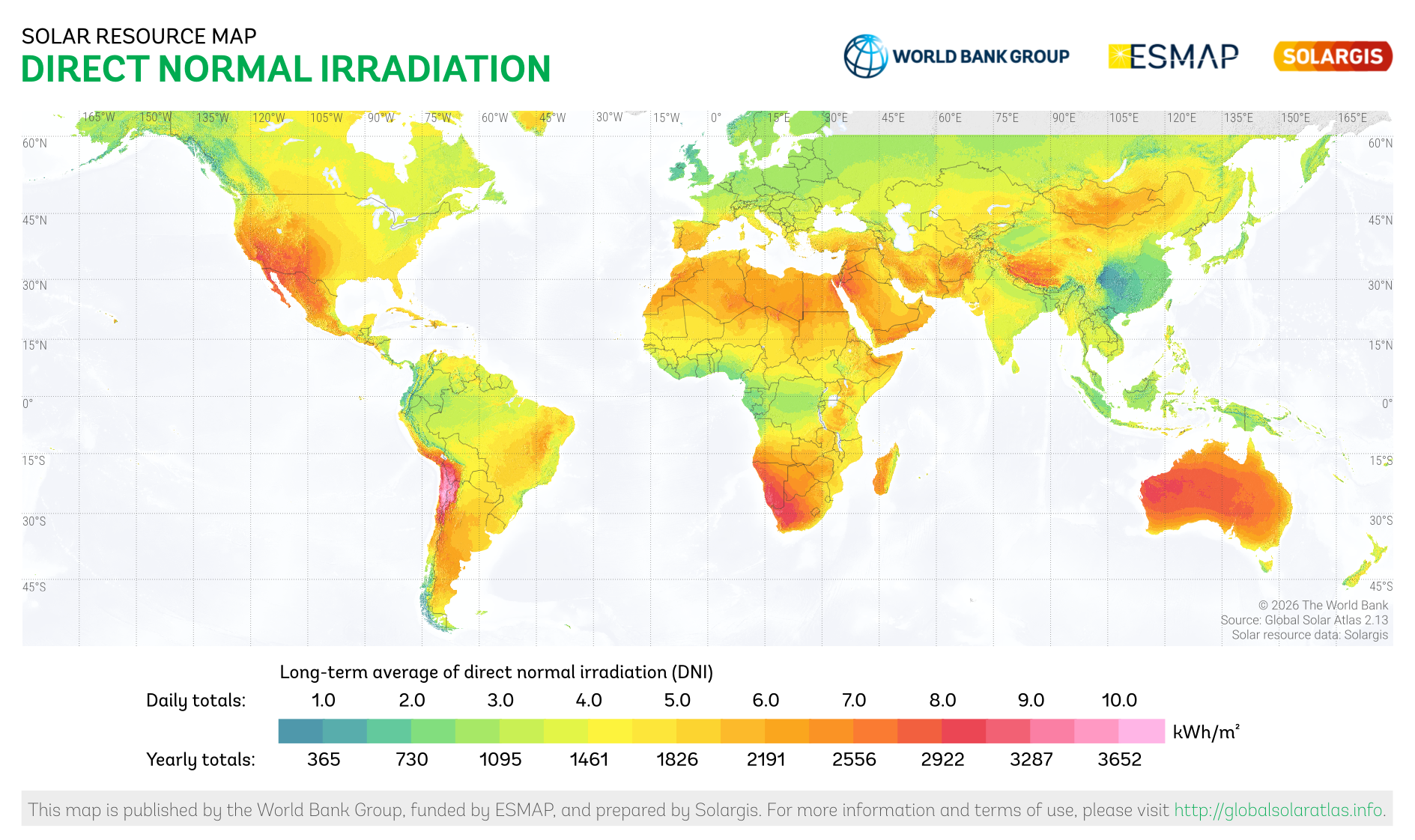
The potential for concentrated solar thermal (CST) is not limited to the sunniest regions. A 2025 Fraunhofer ISE study found that solar thermal systems, including parabolic trough collectors, can provide competitive industrial heat even in Germany, where direct solar irradiation is relatively modest. The results depend on system design, energy prices and available investment support.

For countries with stronger solar resources and high dependence on imported fuels, CST is therefore worth considering as a source of domestic industrial heat. Actual competitiveness must be assessed project by project, considering direct normal irradiation (DNI), industrial heat demand and local energy costs.

For these countries, renewable thermal energy for industry offers an opportunity to reduce dependence on imported fossil fuels, limit exposure to volatile energy prices, and strengthen industrial competitiveness.

Figure 2: Direct Normal Irradiation map. Solar resource map © 2021 Solargis.

What Financing Support Is Available for the Energy Transition?

European Financing: Global Gateway and EFSD+

Current initiatives support the energy transition in fossil-importing economies, particularly in developing regions across Africa, Latin America, and neighboring markets, with an emphasis on risk sharing and private capital mobilization.

The European Union’s Global Gateway strategy, with a global focus on partner countries, frames renewable energy and energy infrastructure investments as strategic assets to enhance economic resilience and reduce dependency on imported fuels, with projects spanning electricity, grids, storage, and renewable heat. Within this framework, the European Fund for Sustainable Development Plus (EFSD+) provides guarantees and blended finance instruments to lower risk and attract private investment in clean energy projects where financing barriers remain high.

The European Investment Bank (EIB), alongside national development finance institutions such as Germany’s Kreditanstalt für Wiederaufbau (KfW) and France’s Agence Française de Développement (AFD), increasingly supports renewable energy projects in developing and emerging economies that displace imported fuels across multiple end uses, including electricity and thermal energy, through concessional loans, guarantees, and technical assistance.

Multilateral Financing: CTF and NAMA Facility

These initiatives build on earlier multilaterally coordinated programs designed to address the financing and risk barriers associated with reducing fossil fuel dependence through clean energy deployment.

The Clean Technology Fund (CTF), established under the Climate Investment Funds and implemented through multilateral development banks, provides concessional finance to accelerate the deployment of low carbon technologies in developing economies, explicitly aiming to displace fossil fuel use through scale and learning effects. Similarly, the Nationally Appropriate Mitigation Actions (NAMA) Facility, funded by Germany, the United Kingdom, Denmark, and the European Union and implemented across Africa, Latin America, and Asia, supported country-driven initiatives that linked emissions reductions with structural economic transformation, moving from isolated pilot projects toward system-level change.

This sample shows how these programs treat reduced fossil fuel dependence as an economic and development objective, while progressively shifting from public funding toward blended finance and private investment mobilization.

What Is Needed to Turn Renewable Potential into Investment?

In economies that depend on fossil imports, energy dependence raises costs and exposure to external shocks. The energy transition offers a pathway to reduce that exposure by replacing imported fuels with domestic renewable energy resources.

Where countries combine high import dependence for actual energy use with abundant solar resources, there is significant potential to reduce vulnerability while strengthening energy independence. How this potential translates into outcomes depends largely on financing conditions and institutional capacity – factors that existing programs explicitly seek to address.

The technologies required are already deployed, demonstrated, and commercially available across multiple applications and markets, but financing and deployment at scale remain the challenge.

About FersiSolar

At FersiSolar, our work supports the deployment, integration, and performance of concentrated solar thermal technologies in global projects. Through engineering, consulting, and operational support, we engage with asset owners, operators, and financial actors across different markets to provide renewable thermal energy for industry. This includes technical services for CSP plants and the development of models for supplying renewable solutions for industrial heat, with the aim of ensuring that available technologies translate into reliable, scalable, and economically viable outcomes.

Sources and references

  1. Ember (2025) – Energy Security in an Insecure World
  2. International Monetary Fund (IMF, 2024) – Energy Security and the Green Transition
  3. International Energy Agency (IEA, 2025) – Gaining an Edge: Energy Demand and Competitiveness
  4. United Nations Industrial Development Organization (UNIDO, 2024) – Industrial Development Report 2024
  5. Network for Greening the Financial System (NGFS, 2023) – Scaling Up Blended Finance for Climate Mitigation and Adaptation in EMDEs
  6. Our World in Data – Energy Imports and Exports (% of Energy Use)
  7. European Commission – Global Gateway / EFSD+ – Green Energy for Africa and Asia (KfW/DEG)
  8. Climate Investment Funds (CIF) – Clean Technology Fund (CTF)
  9. Mitigation Action Facility (formerly NAMA Facility) – Our Story

Concentrated Solar Thermal Energy Guide

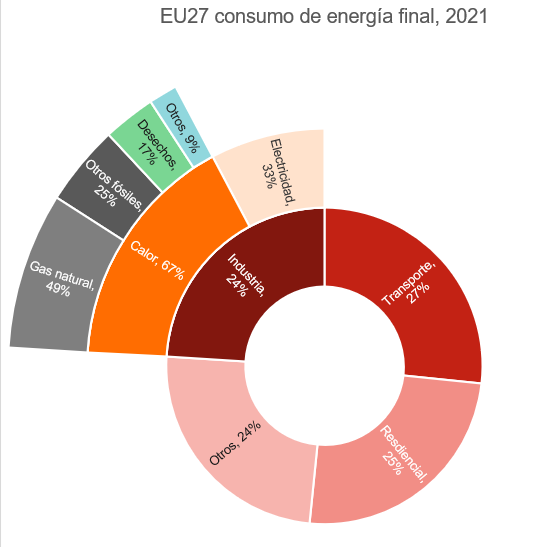
The decarbonization of industry represents one of the major challenges of the energy transition. Heat is at the heart of this challenge: two-thirds of annual energy consumption in industries in the European Union is used for process heat. At present, the vast majority of this consumption is supplied by fossil fuels, with natural gas playing a central role.

Figure 1: Final energy consumption in the EU in 2021. Source: World Energy Balance 2022, IEA

With the aim of promoting the deployment of technologies that can change this situation, the Institute for Energy Diversification and Saving (IDAE) has published the “Guide to Concentrated Solar Thermal Energy for Industrial Processes”. This document provides detailed and relevant information on concentrated solar thermal energy technology, particularly aimed at industrial users seeking sustainable and efficient alternatives for their medium- and high-temperature, energy-intensive processes (100–400°C). In this blog, we summarize the most important information from the Guide.

The Role of the Technology

Concentrated solar thermal (CST) energy is emerging as one of the most attractive solutions for meeting industrial thermal demand. It is a proven technology capable of supplying renewable heat in a stable and competitive way, integrating robustly into industrial processes through the use of thermal energy storage, ensuring operational continuity and reducing dependence on fossil fuels.

Sectors and Processes of Interest

CST is particularly well suited to industries requiring heat in the medium-temperature range (100–400°C).

  • In the food and beverage sector, for example, it can be integrated into processes such as drying, pasteurization, sterilization, and industrial frying.
  • In the chemical and plastics industries, CST can cover synthesis, distillation, extrusion, and polymer molding.
  • The textile sector, which is heat-intensive for dyeing, drying, and fabric finishing, can also find a realistic and scalable alternative in CST.
  • Mining and construction materials, with processes such as mineral drying and gypsum kilns, represent sectors with high thermal demand and available space for solar installations.

The industrial processes of greatest interest for CST include steam and hot water production, drying treatments, and separation processes. A key aspect is thermal energy storage, which makes CST a competitive option compared with alternatives such as photovoltaics, as it ensures thermal supply at night or during cloudy periods. This is particularly valuable for factories operating continuously or with stable thermal loads.

Other Technologies for Decarbonization

When comparing the different decarbonization options available for industrial processes in the 100–400°C range, the conclusion is clear. Biomass can provide heat, but it raises significant environmental concerns: it competes with biodiversity, generates air pollution, and also emits greenhouse gases in the present that must be reabsorbed through the growth of new forests in the future. Industrial heat pumps, meanwhile, although highly promising, still do not have commercial solutions capable of reaching these temperatures and currently supply heat only up to 150°C.

Electric boilers powered by self-consumption photovoltaics are the only real alternative to solar thermal with a competitive price, due to the low cost of photovoltaic modules and the possibility of participating in ancillary services markets for the electricity grid. However, solar thermal also has its advantages, foremost among them lower land requirements.

Against this backdrop, concentrated solar thermal energy offers a robust proposition: renewable, continuous heat, with a price that depends on the…

Institutional Recognition of the Technology

Thanks to these advantageous characteristics, institutional support for CST is growing significantly in Spain. Among the most important programs and initiatives are the following:

  • The Energy Saving Certificate (CAE) system, which allows the energy savings achieved through solar thermal installations to be monetized, generating an additional revenue stream that improves project profitability. A specific measure for the technology is expected to be published; it is currently under development.
  • The Recovery, Transformation and Resilience Plan includes specific funding for renewable heat projects in industry, with an emphasis on integrating solutions such as CST.
  • European Regional Development Fund (ERDF) funds for 2021–2027 also support renewable energy investments in regions with high potential, opening the door to scalable projects beyond the pilot phase.
  • The LIFE Programme, in turn, finances innovation and demonstration projects that are essential for validating novel applications in specific industrial sectors.

Alongside institutional support, the economic model has also evolved. The Heat as a Service (HaaS) model is emerging as a transformative element, as it removes the initial investment barrier for industrial customers. Under this model, the customer does not purchase the plant but pays only for the heat consumed. In this way, the technology and operational risk is assumed by the service provider, while the beneficiary company obtains renewable heat at stable and predictable prices. This approach is particularly attractive in a context of high gas and electricity price volatility, as it provides economic certainty and competitiveness. It also allows small and medium-sized industries, which under other circumstances might not be able to afford an investment in CST, to access the benefits of the technology.

Conclusion

In conclusion, decarbonizing industrial heat in the 100–400°C range is an important challenge in the energy transition. The options are limited: biomass, with its environmental impacts; electrification through electric boilers, which are competitive but dependent on electricity prices and more land-intensive due to the photovoltaic generation required; and, finally, concentrated solar thermal energy. Among these options, CST stands out as the most mature, competitive, and scalable. It provides renewable and continuous heat thanks to thermal storage, can be adapted to multiple industrial sectors, benefits from growing institutional support, and offers innovative business models such as Heat as a Service, which reduce barriers to entry and facilitate widespread adoption.

Spain, with its exceptional solar resource and supportive institutional framework, has the opportunity to position itself at the forefront of this transformation and lead the decarbonization of industrial heat in Europe.

Energy Saving Certificates (CAEs) in Spain: An Economic Driver for Industrial Decarbonization

Why Talk About CAEs Now?

The energy sector is entering an important deployment phase. Energy efficiency and fossil fuel reduction technologies are being applied in industrial environments with measurable results. The next step is to facilitate the implementation of these projects.

Energy Saving Certificates (CAEs) introduce an additional variable into decision-making by assigning a direct economic value to the savings generated. Energy savings are reflected in a reduction in consumption and an associated additional income. This changes the investment analysis, expands the number of viable measures, and improves their profitability.

CAEs are a tool for financing the implementation of industrial projects. This article presents the fundamentals of the system, its application to industrial projects, and FersiSolar’s role in integrating this type of solution.

What Are CAEs?

CAEs represent certified final energy savings, measured in kWh, generated by a specific action. The difference between an initial and a subsequent situation is quantified through Royal Decree 36/2023, verified through the instructions of the assigned standardized measure, and converted into an asset within the system.

One example of the application of CAEs is the transition from natural gas boilers to high-efficiency electric boilers at an industrial plant. This action significantly reduces natural gas consumption and the associated CO₂ emissions. By generating energy savings, the plant can obtain CAEs, which are tradable on the market, thereby providing an additional source of income and promoting economic sustainability. In this way, not only does the project contribute to industrial decarbonization, but it also promotes a responsible commitment to the environment.

The process involves technical validation of the savings through validated calculation methodologies and correction factors, as well as independent verification by an accredited entity. It is subsequently processed through authorized agents and issued by the regional administration, with registration at national level.

Once issued, CAEs can be traded. Energy savings therefore acquire economic value in addition to reducing consumption. This link between technical savings and economic value is what makes the mechanism relevant for industrial projects.

Important clarification: The system measures energy savings, not emissions, although both effects are usually aligned.

Generating Value from Energy Savings

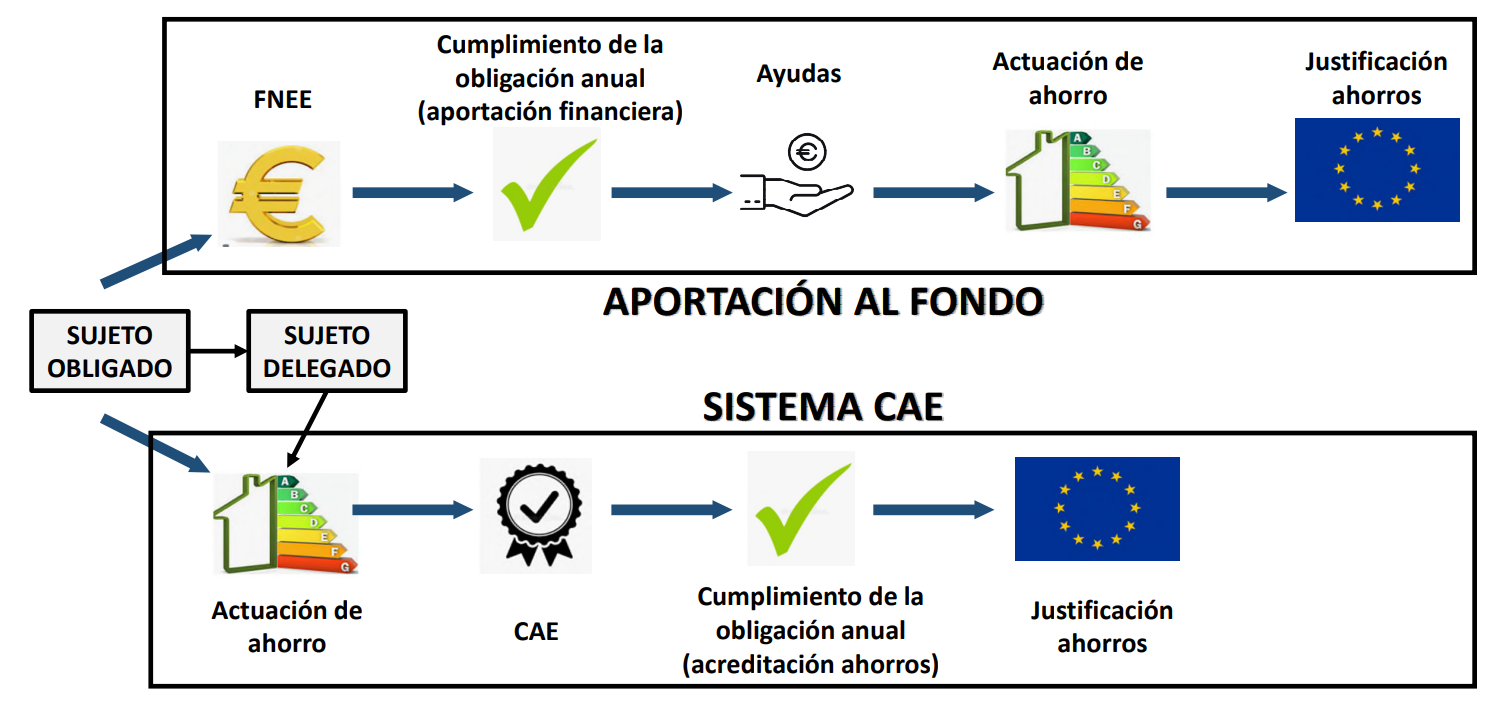
The CAE system is based on a regulatory obligation: energy retailers and suppliers must meet annual energy-saving targets (obligated parties). To do so, they can contribute to the FNEE (National Energy Efficiency Fund) or acquire CAEs generated by projects.

This connects the different stakeholders: a company reduces its consumption, those savings are certified, and they become an asset that other parties need to acquire.

The mechanism follows a simple flow: savings → certification → transfer of value to the project, as shown in Figure 1.

Figure 1. The CAE vs. FNEE process. Source: MITECO

France as a Reference

This approach is already established in reference markets such as France. France has had the CEE (Energy Efficiency Certificates) system since 2005, fully integrated into its energy market. Its adoption in Spain makes it possible to assign value to energy savings within a similarly structured framework.

The system includes standardized measures that simplify implementation and reduce the administrative burden. This facilitates validation and adoption across different sectors. The revenues associated with savings are incorporated into projects from the outset, together with investment and energy savings.

Spain is adopting a model supported by this experience, accelerating its implementation curve.

Spain: Current Status

The CAE system was introduced in 2023 and is currently being deployed. The number of projects is growing and standardized measures are being developed.

Currently, many projects are assessed on a case-by-case basis, particularly in complex industrial environments. In concentrated solar thermal applications, there is still no standardized measure, although proposals are under evaluation.

However, projects can be developed as specific actions, allowing savings to be certified through specific verification. This makes it possible to monetize savings today while the system evolves towards greater standardization.

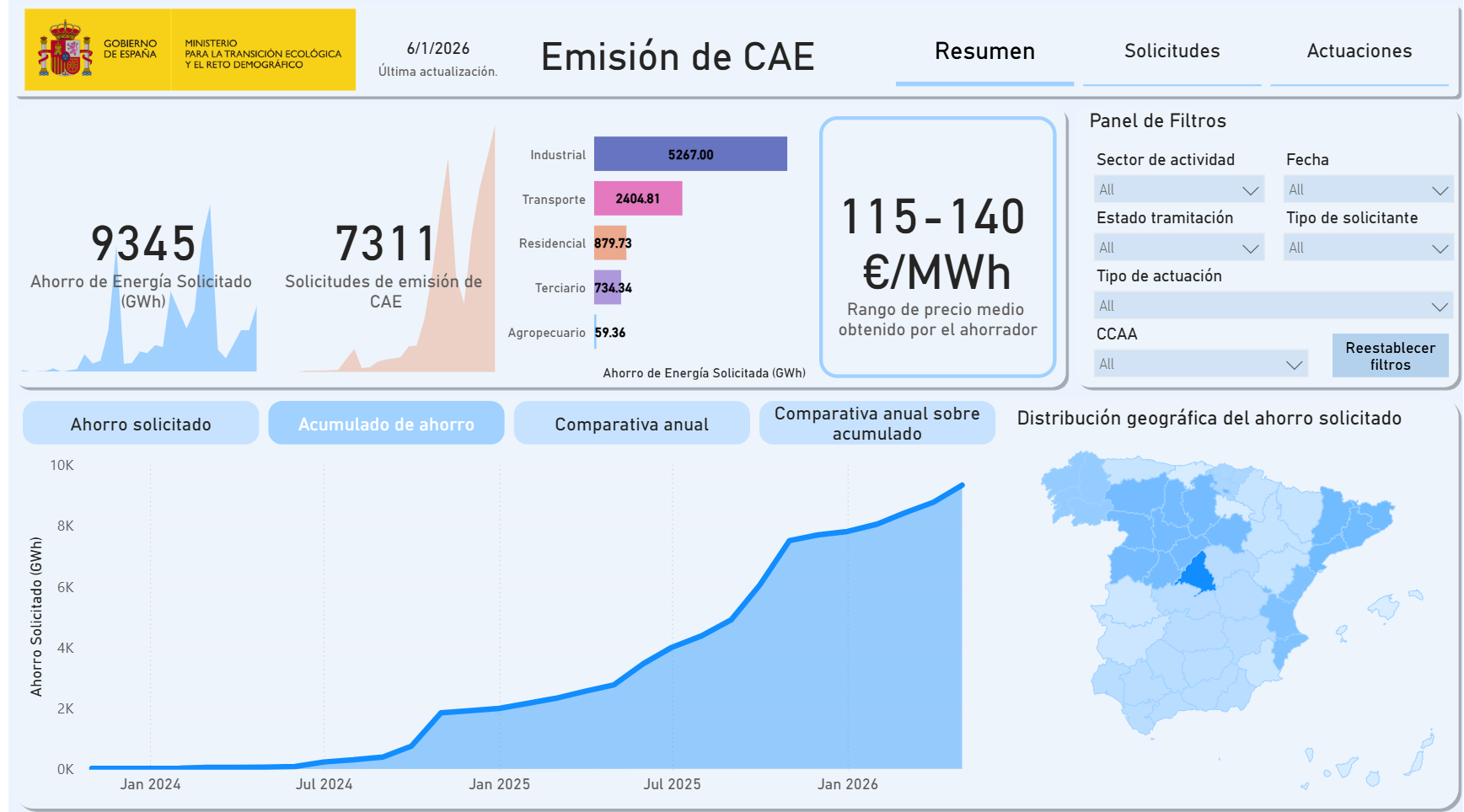
According to Figure 2, approximately 7,311 applications for CAE issuance have been submitted up to 2026, representing total energy savings of 9,345 GWh, of which industry accounts for more than 50%.

Figure 2. Current status of CAE issuance.

The Role of Industrial Heat and Concentrated Solar Thermal Technology

Heat accounts for a significant share of industrial energy consumption, particularly in steam processes and medium- and high-temperature applications. Replacing fossil fuels with concentrated solar thermal technologies makes it possible to directly reduce this consumption. This reduction can be quantified and fits within the CAE system.

This type of action is eligible provided that it results in a reduction in final energy consumption at the facility.

Practical Example: Integration in the Food Industry

To understand how the generation of CAEs can influence the economics of an industrial plant, such as a brewery, dairy facility, or food processing plant, a simplified example is presented below.

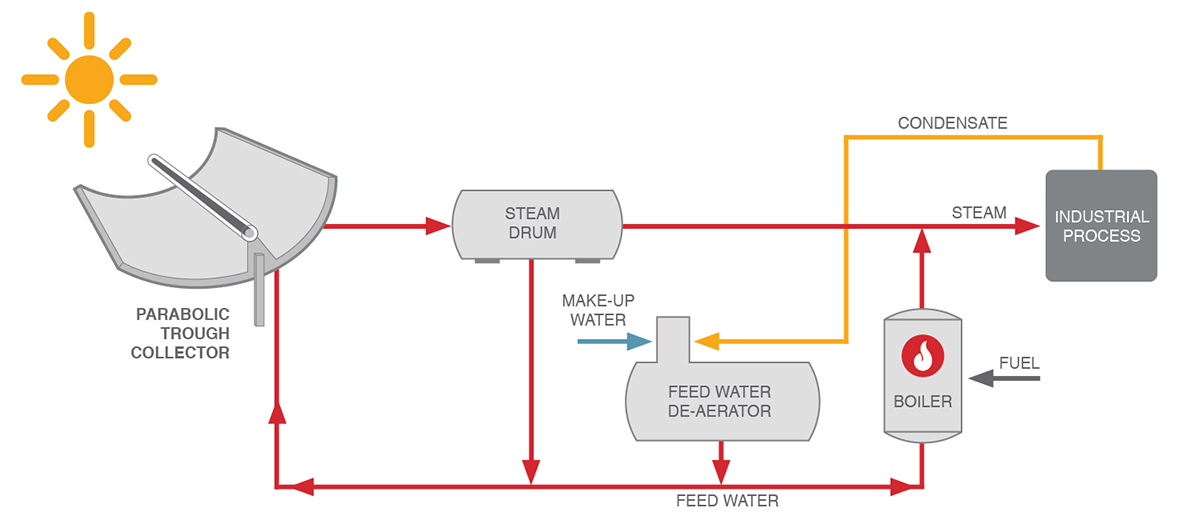
Figure 3. Integration of concentrated solar thermal energy into industrial processes. Source: IDEA, 2025.

This example can be approximately represented as shown in Figure 3. The plant has a high thermal demand for steam in processes such as cooking or cleaning.

Initial Situation

  • Thermal consumption: ~40 GWh/year
  • Steam supplied by a gas boiler (~10 MWt)
  • The concentrated solar thermal system is integrated into the existing circuit, displacing gas consumption during solar hours, while the boiler acts as backup.

Intervention

  • Concentrated solar thermal (~5 MWt)
  • Integration with the existing system
  • Thermal energy storage
  • With ~5 MWt, approximately 25% of annual demand is covered, reducing gas consumption by ~10,000 MWh.

Result

  • Solar production: ~10 GWh/year
  • Gas reduction: ~25%
  • Energy savings: ~10,000 MWh/year

These savings can be certified as CAEs, subject to the baseline, operating conditions, and verification.

CAEs Generated

  • ~10,000 CAEs

The associated income is incorporated into the project’s economic model, improving its viability.

Economic Value

  • Indicative market price: ~€115–140/MWh
  • Revenue: €1.15–1.40 million

How FersiSolar Fits In

FersiSolar designs and integrates concentrated solar thermal systems adapted to industrial processes, including generation, integration, and storage. The result is a measurable reduction in fossil fuel consumption that may be eligible for certification as CAEs.

In addition, project preparation from the outset includes defining the baseline, identifying savings, and structuring the project for verification in accordance with the guidelines of Royal Decree 36/2023.

This approach not only contributes to industrial decarbonization, but also improves the company’s economic sustainability by diversifying its sources of income and reducing operating costs in the long term.

The Current Market Reality

Energy efficiency solutions are already deployed in industry and operate under real service conditions. Projects combine investment, operation, and energy savings, increasingly incorporating revenues associated with CAEs. The CAE system adds a mechanism that connects these savings with the market and allows them to be assigned economic value.

Its development is progressing, with verification and standardization processes gradually maturing, particularly in complex industrial applications. This makes it possible to structure projects more robustly as the system evolves.

At FersiSolar, we firmly believe that what is good for the planet can also be good for business. We are excited to see environmental improvements becoming increasingly profitable.

Leading Heat Collection Element Decisions in CSP Plants

HCE Supply for CSP Plants

Over the past year, FersiSolar structured and executed its first Huiyin HCE supply project for a CSP plant. That first operation marked the beginning of a line of work that has since been consolidated through new technical assessments, economic analyses, and discussions with operators facing similar challenges in their plants and solar fields.

This work is supported by solid experience in CSP technologies and a deep understanding of how these facilities operate as a whole. From solar field design to the day-to-day operation of the CSP plant, we provide technical judgment based on an integrated view of the asset, understanding that the performance and profitability of a facility are determined by the interaction between technologies, operating conditions, and economic objectives. This system-level perspective is the foundation from which we guide decision-making in projects.

Heat Collection Elements (HCEs) play a key role within the solar field, as they are responsible for transforming concentrated solar energy into useful thermal energy. Their performance directly affects thermal losses, solar field efficiency, and the plant’s annual output.

The HCE as Part of the System

Thanks to our global technical knowledge of CSP technologies, we assess and structure decisions regarding HCEs, considering their interaction with the existing design, operating temperatures, thermal ramp rates, and operation and maintenance requirements.

By analyzing these aspects, we define clear decision-making criteria, guiding our clients towards coherent and sustainable decisions aligned with the actual operation of the CSP plant and its technical and economic objectives.

In many cases, this approach makes it possible to identify additional technical and economic optimization opportunities, combining HCE selection with design or operational adjustments that amplify the benefit to the asset’s overall performance.

Why Huiyin HCEs Are a Preferred Option

Huiyin HCEs have demonstrated a strong technical fit for the projects assessed within this line of HCE supply projects. They incorporate stable high-temperature selective coatings, advanced vacuum and hydrogen management, and unique in-line re-evacuation technology, which makes it possible to restore the tube’s thermal conditions without replacing it.

These characteristics provide operational flexibility, reduce the impact of degradation, and contribute to maintaining competitive solar heat for industry. From a technical and economic perspective, they stood out as the best solution within the evaluation process, aligning with actual operating conditions and showing clear potential to recover solar field performance.

For this reason, they were positioned as the preferred option within the evaluation process and ultimately selected by the clients themselves as the optimal solution within the broader framework of a CSP plant optimization strategy.

Effective Lifetime and Degradation as Key Factors

Although HCEs are generally designed for a theoretical service life of several decades, plant experience shows that their effective lifetime is affected by progressive degradation. Vacuum loss, hydrogen accumulation, and coating aging progressively increase thermal losses.

At FersiSolar, we systematically analyze CSP plant performance, interpreting how this degradation evolves and how it translates into technical and economic impacts. This approach makes it possible to determine when an intervention – such as HCE replacement – provides a tangible benefit in terms of cost, performance, and system reliability.

Evaluating HCE Replacement or Performance Improvement

In most CSP plants, the need to assess HCE replacement arises from actual operating conditions. The first signs are often subtle: deviations in output, progressively increasing thermal losses, or reduced stability in operating temperatures.

At this point, we define the optimal timing for intervention together with the operator, identifying when to act to recover performance, improve energy efficiency, and protect asset value. This analysis considers the impact on renewable heat production, operating costs, and project objectives.

Long-Term Operational Capability

Beyond technology selection, the projects we structure focus on strengthening the long-term operational capabilities of plants. This includes technical support during the integration of new solutions, knowledge transfer, and clarity in the analytical criteria used.

The result is a CSP plant with improved thermal balance, greater operational control, and clearer visibility into its performance. At the same time, the asset is better prepared to sustain and expand these improvements over time, integrating optimization into a strategy aligned with the energy transition in industry.

About FersiSolar

FersiSolar was founded on the extensive international experience of its main founder, Toni Fersini, in the concentrated solar power sector. Its objective is to put this experience at the service of asset owners, investment funds, and financial institutions.

The company is built around three key pillars:

  • Advisory services for CSP plant operation and maintenance companies
  • Engineering and technical consulting for solar thermal energy solutions
  • Sustainable heat supply for industry

From this foundation, FersiSolar structures and guides complex decision-making in CSP plants, turning technical analysis into real and profitable improvements in performance, energy efficiency, and emissions reduction.

Let’s Collaborate

Decisions related to HCE replacement, performance improvement, or solar field optimization require a comprehensive view. They require an understanding of how technologies interact and how the system evolves over time.

If a CSP plant or project is evaluating these options in the context of renewable industrial heat and decarbonization, FersiSolar can support and guide the decision-making process, providing technical judgment, practical experience, and a results-oriented perspective.

Another Starling Reference for FersiSolar

Following the successful completion of yet another project, FersiSolar once again demonstrates what consistent solar field expertise looks like when applied to real operating conditions – translated into delivered results. 

Project Context and Scope of Services 

The project addressed a familiar but critical challenge in large solar thermal plants: the gap between expected performance under theoretical design conditions and actual performance under real‑world operation. While the plant was engineered to meet specific output and efficiency targets, observed behavior over time revealed deviations driven by operational constraints, component performance variability, and system‑level interactions within the solar field. 

To address these challenges, FersiSolar was engaged to deliver a comprehensive and integrated set of services, including: 

  • Advanced plant and solar field performance analysis based on operational data 
  • Root Cause Analysis (RCA) of low‑performing collectors, using tracking, optical, and thermal performance assessment 
  • Continuous remote monitoring of solar field performance, including early detection of abnormal behavior and timely notification protocols 
  • Targeted recommendations to improve temperature control, flow management, and solar field balancing 
  • Multidisciplinary solar field engineering support across mechanical, process, I&C, electrical, and civil disciplines 
  • On‑site engineering support during construction activities and throughout commissioning 

These services were delivered as a single, coordinated effort, ensuring technical consistency from diagnosis through implementation and enabling the plant to progressively close the gap between theoretical expectations and achieved operational performance. 

From the outset, the collaboration focused on establishing a clear, data‑driven understanding of plant behavior and operational constraints under real conditions. The engagement was addressed as a cohesive, end‑to‑end effort, integrating analysis, operational support, and on‑site engineering activities. 

The strength of this foundation was clearly recognized by the customer: 

“FersiSolar demonstrated strong expertise in optimizing plant operation, identifying concrete performance improvement opportunities through detailed plant data analysis.” 

This analytical depth formed the backbone of all activities delivered throughout the project. 

Identifying the Real Sources of Underperformance 

A key pillar of the project was the precise identification of performance limitations within the solar field. A structured diagnostic process was applied to investigate performance deviations at collector level, supported by detailed operational data and field measurements. 

Rather than focusing on isolated symptoms, this structured approach enabled a clear understanding of underlying causes, interactions between subsystems, and recurring patterns affecting performance. As a result, corrective actions could be prioritized based on impact and operational relevance, rather than applied generically across the field. 

The customer emphasized the value of this approach, noting that:

“FersiSolar showed deep experience in the Root Cause Analysis of low‑performance collectors by combining tracking data with optical and thermal performance assessment, enabling rapid identification of underperforming collectors and timely, effective corrective actions.” 

This methodology allowed inefficiencies to be isolated with accuracy, ensuring responses were targeted, actionable, and firmly grounded in measurable plant data, with a direct impact on long‑term emissions reduction and performance stability. 

Driving Measurable Solar Field Performance Improvements 

Building on this analytical foundation, FersiSolar delivered clear and actionable recommendations aimed at improving overall solar field performance. Particular attention was given to critical operational parameters such as temperature control and solar field balancing, ensuring stable operation and optimized energy delivery to the power block. 

These recommendations were developed with a strong operational mindset, aligning detailed engineering insight with practical, day‑to‑day plant implementation. Emphasis was placed not only on achievable performance gains, but also on ensuring that proposed actions could be sustained under variable operating conditions and evolving plant constraints. 

 Continuous Oversight Through Remote Monitoring 

To safeguard performance gains and support operational stability, routine support was delivered through continuous remote monitoring of the plant’s performance. 

Remote monitoring was used as a permanent operational support tool, providing continuous visibility of solar field behavior over time. This approach supported early detection of deviations, reduced response times, and enabled informed operational decision‑making during transient conditions, maintenance periods, and off‑design operation. 

The importance of this capability was clearly acknowledged by the customer, who described that:

“The service provided by FersiSolar includes routine support through remote monitoring of the plant’s performance, with immediate notification protocols for any abnormal behavior detected within the solar field.” 

Comprehensive Solar Field Engineering Support 

The project also involved extensive solar field engineering support across mechanical, process, I&C, electrical, and civil disciplines. This included advanced analysis of the existing solar field and its hydraulic limitations, ensuring system‑wide impacts were fully understood prior to implementation. 

In parallel, FersiSolar supported on‑site inspections during construction activities and provided technical assistance throughout commissioning, maintaining alignment between design intent, installation quality, and operational readiness. The breadth of activities was handled as a unified scope, strengthening overall industrial competitiveness. 

A Structured, Long‑Term Technical Partnership 

This project collaboration was not limited to isolated studies or one‑off interventions, but rather evolved into a structured, ongoing technical engagement extending over operational periods. Analysis, monitoring, and engineering support were applied iteratively, allowing findings from one phase to be validated, refined, and extended in subsequent operating windows. 

Throughout the engagement, FersiSolar worked seamlessly across borders, cultures, and project teams, integrating effectively with owners, operators, and on‑site personnel to ensure clarity, alignment, and continuity. 

Reflecting on this collaboration, the customer stated: 

“FersiSolar’s experience and proactive approach make them a key partner in our operations, and we are confident in their ability to deliver substantial improvements in solar field performance.” 

Strengthening Long‑Term Operational Capabilities 

Beyond immediate performance improvements, the project simultaneously placed strong emphasis on long‑term operational robustness. Targeted on‑site training and detailed written instructions were provided to support both current solar field strategies and future optimization opportunities. 

Plant personnel were trained with full transparency into calculations, methodologies, and engineering logic, reinforcing technical understanding and operational confidence across the team. 

Results That Extend Beyond the Project Scope 

The result of this collaboration was a solar field operating with improved balance, enhanced temperature control, and stronger performance visibility. Just as importantly, the plant emerged better equipped to sustain and build upon the improvements achieved. 

This project stands as another strong reference for FersiSolar’s role as a trusted engineering and consulting partner for parabolic trough CSP plants worldwide. With experience spanning engineering, construction, commissioning, and O&M optimization, FersiSolar consistently delivers expertise that translates into real operational value. 

To learn more about this specific project competency, or to explore how our services can support your unique solar field, get in contact with us. 


Eficiencia, Alianzas y el Camino a las Cero Emisiones: Nuestra llegada a ANESE

El sector energético está experimentando su mayor transformación. Conceptos que antes eran técnicos, como “descarbonización” o “servicios energéticos”, hoy están en el centro de las estrategias de cualquier empresa competitiva. Por eso, hemos dado un gran paso en la Asociación Nacional de Empresas de Servicios Energéticos (ANESE).

  1. ¿Qué son los Servicios Energéticos y cómo funcionan?

Para entender el valor de nuestra incorporación a ANESE, primero hay que entender el funcionamiento de las Empresas de Servicios Energéticos (ESE).

A diferencia de una consultora tradicional, el enfoque de una ESE no está en vender equipos sino en garantizar resultados de ahorro.

El funcionamiento del modelo ESE

Se basa en la mejora de la eficiencia energética en las instalaciones de un usuario, ofrecen un conjunto de servicios que incluyen la realización de inversiones inmateriales, obras o suministros para optimizar la calidad y reducir los costes energéticos.

  • Auditoría y Diagnóstico: Se analiza dónde se está perdiendo energía y que cambios tecnológicos son los más rentables.
  • Implementación de medidas: Se instalan soluciones tecnológicas avanzadas (fotovoltaica, aerotermia, sistemas de control inteligente).
  • Gestión del Riesgo: El cliente no asume el riesgo de que la tecnología no funcione; es la ESE quien garantiza que, si no hay ahorro, no hay beneficio.
  • Verificación y Medida: Se utilizan protocolos internacionales para demostrar, con datos reales, cuánto CO2 y cuánto dinero se está dejando de emitir y gastar.
  1. Nuestra incorporación a ANESE:

ANESE es la asociación de referencia en España que agrupa a las organizaciones y especialistas más relevantes del ámbito energético en España.

Nuestra entrada en este grupo no es un mero trámite, es una validación de nuestra forma de trabajar.

¿Qué supone para nosotros?

  • Certificados de Ahorro Energético (CAEs): Estamos integrados en el nuevo sistema que permite monetizar los ahorros de energía, devolviendo parte de la inversión a nuestros clientes de forma mucho más ágil que las subvenciones tradicionales.
  • Seguridad y transparencia: Trabajamos bajo estándares reconocidos que dan tranquilidad a nuestros clientes. Pertenecer al grupo de ANESE es una garantía de buenas prácticas.
  • Formación continua: Nos permite estar al día de los cambios constantes en la normativa energética, algo muy importante para poder asesorar de manera adecuada a cualquier empresa o institución.

No queremos ser una empresa más que pertenezca al grupo simplemente por aparecer en una lista, sino que queremos participar activamente en todos los proyectos que nos sea posible ya que a partir de todo el trabajo que se está llevando a cabo, se definirá como será gestionada la energía en la próxima década

  1. La Descarbonización:

Todo lo anteriormente comentado tiene un objetivo superior: la descarbonización.

España y la Unión Europea tienen metas legales muy estrictas para alcanzar la neutralidad climática en 2050. Sin embargo, la descarbonización es un proceso profundo que se basa en tres pilares donde nuestra labor es crítica:

  • La optimización del consumo como punto de partida

La energía más limpia es la que no se llega a consumir, antes de plantear cualquier cambio en la fuente de suministro o instalar generación renovable, es vital optimizar la demanda existente.

Reducir el consumo innecesario es la vía más rápida y rentable para la descarbonización, ya que disminuye las emisiones de forma inmediata mientras mejora la competitividad económica.

  • La implementación de fuentes renovables 

Descarbonizar implica sustituir procesos térmicos fósiles (calderas de gas o gasoil) por sistemas termosolares o eléctricos de alta eficiencia en función del caso. Al ser socios de ANESE, facilitamos que esta transición tecnológica sea económicamente viable para las empresas a través de ahorros compartidos.

  • El papel de los Certificados de Ahorro Energético (CAE)

Este es el gran aliado de la descarbonización actual, el sistema de CAEs incentiva que las empresas inviertan en eficiencia energética. Por cada kWh de energía que no ha sido consumido mediante una mejora tecnológica, se genera un certificado que tiene un valor económico. Esto acelera el retorno de inversión y hace que descarbonizar sea, por fin, un buen negocio.

En conclusión, nuestra incorporación a ANESE representa el compromiso de llevar la descarbonización del papel a la realidad.

Estamos convencidos de que el modelo de servicios energéticos es la herramienta más eficaz para que el tejido empresarial español cumpla sus objetivos climáticos sin perder competitividad.

HCEs degradation; observation from a power plant

We recently completed an exhaustive inspection and technical evaluation campaign at a Concentrating Solar Power (CSP) plant, specifically focusing on the Heat Collecting Elements (HCEs). These components are, without a doubt, the core of the Parabolic Trough Collector (PTC) technology, and their performance defines the economic and operational efficiency of the entire power station. The evaluation, which covered various Solar Collector Assemblies (SCAs), allowed for the collection of a vast amount of operational and diagnostic data in the field.

The primary objective of this campaign was to compare the performance between HCEs supplied by different manufacturers, analyzing key variables such as physical condition, thermal stability, and, fundamentally, the critical metric that reflects the element’s vacuum status. The findings have been revealing.

Of all the components analyzed, the HCEs from the manufacturer Hiuyin distinguished themselves by exhibiting the best overall performance. Their superiority was not coincidental; it manifested through excellent visual condition (minimal signs of corrosion or material degradation), but in their exceptional behavior regarding the normalization temperature metric and the resulting thermal efficiency.

The Essence of the HCE: Why Vacuum is Key

To understand the importance of the performance metric, it is essential to grasp the function of the HCE. An HCE consists of an inner absorber tube, through which the Heat Transfer Fluid (HTF) circulates, surrounded by an outer glass envelope. The annular space between the two tubes is evacuated to an extremely high vacuum level (typically in the range of 10-4 to 10-3 mbar).

This vacuum chamber plays a vital role: eliminating heat transfer by convection and conduction from the hot absorber tube to the ambient surroundings. Without the vacuum, the glass tube would act as a simple insulator, and the captured thermal energy would be rapidly lost to the atmosphere, drastically reducing the HTF temperature and, consequently, the power generated in the Rankine cycle (or any other power cycle).

In addition to the vacuum, the absorber tube is coated with a selective layer, designed to have high solar radiation absorption (α = 0.95) and low thermal emissivity (Ɛ = 0.10). The combination of the selective layer (which minimizes outgoing radiation) and the vacuum (which eliminates convection/conduction) is what allows the HCE to reach and maintain such high operational temperatures, often exceeding 350ºC.

The Evaluation Metric: A Direct Indicator of HCE Health

The performance metric referenced in the evaluation, which relates to “normalization temperature behavior” and vacuum status, is perhaps the most valuable and sensitive health indicator of an HCE. As mentioned, this metric is a measure of the Heat Loss from the absorber, normalized or compared under standardized operational conditions.

Key Variables:

  • Tamb,t is the ambient temperature in ºC in the minute the measurement was taken.
  • THTF,t is the HTF temperature in ºC in the minute the measurement was taken.
  • Tobserved,HCE,t is the average temperature in ºC of all observations for the particular HCE in the minute the measurement was taken.

Interpretation of the Metric: Vacuum Diagnosis

The final value of this metric is interpreted as follows:

  • Stable and Negative Values: These indicate a well-preserved vacuum condition ( < 0 or similar). This means the measured heat loss (represented by Tnormalized,HCE,t ) is below or very close to the optimal reference value (corresponding to a perfect vacuum).
  • Values Near Zero or Positive: These signal a significant loss of vacuum (≥ 0). When the vacuum degrades, the residual gas begins to conduct and convect heat out of the absorber, increasing the loss. This causes the measured value ( or the calculated ) to increase. The result is a notable reduction in efficiency and a lower HTF outlet temperature under the same irradiance.

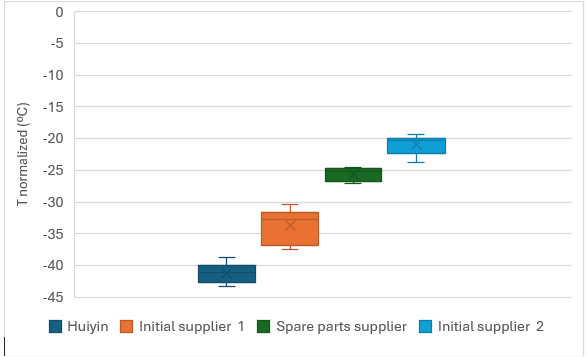
  • Considering that both were installed at the same time, the graph clearly shows that Huiyin performs significantly better than other provider.
  • Looking at the previous graph, it’s clear that initial supplier 1 performs better than initial supplier 2. It’s surprising, considering they were both installed at the same time.

Re-evacuation.

As we can see, HCEs naturally deteriorate over time, since their internal vacuum gradually decreases and performance drops. However, even the Huiyin receivers offer a very valuable advantage: their re-evacuation capability.

This process makes it possible to restore the vacuum level almost to its original state, and it also allows the getters to be reused. The hydrogen they have accumulated can be removed again through a high-vacuum, high-temperature treatment, and Huiyin has the proper equipment to carry this out. Even better, a getter can be recycled up to about ten times.

This re-evacuation capability is highly beneficial because it allows us to extend the useful life of the HCEs for many more years, maintaining their performance and reducing the need for premature replacements.

  1. Warranty Validation and Supplier Evaluation

As demonstrated with Hiuyin’s HCEs, this normalized temperature  is fundamental for the comparative evaluation of suppliers. It allows owners and operators to:

  • Validate Manufacturing Quality: A supplier that consistently produces HCEs that maintain stable negative values for years demonstrates superior quality in materials, the glass-to-metal sealing process, and the final vacuum level. This translates into a lower Levelized Cost of Energy (LCOE) over the long term for the plant.
  • Enforce Warranty Clauses: Contractual HCE warranties are often tied to the maximum heat loss rate. If this normalized metric exceeds a predefined threshold within the warranty period, the operator has objective and  quantifiable proof to request free replacement from the manufacturer. Even in this field, Huiyin provides a distinct advantage, offering a warranty period that is considerably longer than those of other suppliers.
  1. Plant Performance Optimization

Vacuum loss in a single HCE can have a surprisingly disproportionate impact on the entire collector row. When one HCE fails, it starts taking heat away from the HTF flowing through it, and that drop in outlet temperature forces the control systems to make less efficient choices—sometimes concentrating sunlight more aggressively, other times reducing flow just to compensate. And honestly, none of that helps.

This metric ensures that the plant operates with as many collectors as possible under their optimal design conditions. When all HCEs maintain negative normalized loss values, the solar field efficiency stays at its peak. The outcome is clear and genuinely valuable: higher operating income and, just as importantly, greater clean energy generation.


Guía de Energía Solar Térmica de Concentración

La descarbonización de la industria representa uno de los mayores desafíos de la transición energética. El calor es el eje central de este reto: dos tercios del consumo energético anual en las industrias en la Unión Europea es destinado al calor de proceso. En el presente, la alta mayoría de este consumo se abastece con combustibles fósiles, con un papel central del gas natural.

Ilustración 1: Consumo final de energía en la UE en 2021. Fuente: World Energy Balance 2022, IEA

Con la meta de impulsar el despliegue de tecnologías que cambian este panorama, el Instituto para la Diversificación y Ahorro de la Energía (IDAE) ha publicado la “Guía de Energía Solar Térmica de Concentración para Procesos Industriales”. Este documento proporciona información detallada y relevante sobre la tecnología de energía solar térmica de concentración, especialmente dirigida a los usuarios del sector industrial que buscan alternativas sostenibles y eficientes para sus procesos de alto consumo térmico a media y altas temperaturas (100-400ºC). En este blog resumimos la información más importante de la Guía.

El papel de la tecnología

La energía solar térmica de concentración (CST por sus siglas en inglés) emerge como una de las soluciones más atractivas para cubrir demanda térmica en la industria. Se trata de una tecnología probada, capaz de suministrar calor renovable de manera estable y competitiva que se integra de manera robusta en los procesos industriales a través del uso de almacenamiento térmico, asegurando continuidad operativa y reduciendo la dependencia de los combustibles fósiles.

Sectores y procesos de interés

La CST es especialmente adecuada para industrias que requieren calor en el rango medio de temperaturas (100-400ºC).

  • En el sector de la alimentación y bebidas, por ejemplo, puede integrarse en procesos como el secado, la pasteurización, la esterilización o la fritura industrial.
  • En la química y los plásticos, la CST cubre la síntesis, la destilación, la extrusión y el moldeo de polímeros.
  • El sector textil, intensivo en calor para el teñido, el secado y la fijación de tejidos, también encuentra en la CST una alternativa realista y escalable.
  • Por su parte, la minería y los materiales de construcción —con procesos de secado de minerales y hornos de yeso— representan sectores con gran demanda térmica y espacio disponible para instalaciones solares.

Los procesos industriales de mayor interés para la CST incluyen la producción de vapor y agua caliente, los tratamientos de secado y los procesos de separación. Un aspecto clave es la capacidad de almacenamiento térmico, que convierte a la CST en una opción competitiva frente a alternativas como la fotovoltaica, ya que garantiza suministro térmico durante la noche o en periodos nublados. Esto resulta especialmente valioso para fábricas con operación continua o con cargas térmicas estables.

Otras tecnologías para la descarbonización

Si se comparan las distintas opciones de descarbonización disponibles para procesos industriales en el rango de 100 a 400ºC, la conclusión es clara. La biomasa puede aportar calor, pero plantea importantes problemas ambientales: compite con la biodiversidad, genera contaminación atmosférica y además emite gases de efecto invernadero en el presente que se tienen que reabsorber con el crecimiento de nuevos bosques en el futuro. Las bombas de calor industriales por su parte, aunque muy prometedoras, todavía no cuentan con soluciones comerciales capaces de alcanzar estas temperaturas y en el presente suministran sólo hasta 150ºC.

Las calderas eléctricas, abastecidos por fotovoltaica de autoconsumo son la única alternativa real con un precio competitivo a la termosolar, debido a los bajos precios de los módulos fotovoltaicos y al a posibilidad de participar en los mercados de servicios auxiliares para la red eléctrica. Sin embargo, la solar térmica tiene sus ventajas también, jefa de las cuales una menor ocupación de suelo.

Frente a todo ello, la energía solar térmica de concentración ofrece una propuesta robusta: calor renovable, constante, con precio que depende del

Reconocimiento institucional de la tecnología

Gracias a estas características ventajosas, el respaldo institucional a la CST está creciendo de manera notable en España. Entre las piezas de programas más importantes son los siguientes:

  • El Sistema de Certificados de Ahorro Energético (CAEs), que permite monetizar las reducciones de consumo logradas mediante instalaciones solares térmicas, generando un canal adicional de ingresos que mejora la rentabilidad de los proyectos. Se espera la publicación de un ficha específica para la tecnología, que está en trámite en el presente.
  • El Plan de Recuperación, Transformación y Resiliencia incluye financiación específica para proyectos de calor renovable en la industria, con énfasis en la integración de soluciones como la CST.
  • Los fondos europeos FEDER 2021–2027 también apoyan inversiones en renovables en regiones con alto potencial, lo que abre la puerta a proyectos escalables más allá de la fase piloto.
  • El programa LIFE, por su parte, financia proyectos de innovación y demostración, fundamentales para validar aplicaciones novedosas en sectores industriales concretos.

Junto con el apoyo institucional, el modelo económico también ha evolucionado. El esquema de Heat as a Service (HaaS) se perfila como un elemento transformador, ya que elimina la barrera de la inversión inicial para los clientes industriales. En este modelo, el cliente no compra la planta, sino que paga únicamente por el calor consumido. De esta manera, el riesgo tecnológico y operativo lo asume el proveedor del servicio, mientras que la empresa beneficiaria obtiene calor renovable a precios estables y predecibles. Este enfoque es especialmente atractivo en un contexto de alta volatilidad del gas y la electricidad, pues ofrece certidumbre económica y competitividad. Además, permite que pequeñas y medianas industrias, que en otras circunstancias no podrían afrontar una inversión en CST, accedan a los beneficios de esta tecnología.

Conclusión

En conclusión, la descarbonización del calor industrial en el rango de 100 a 400ºC es un reto importante de la transición energética. Las opciones son pocas: biomasa, con sus impactos ambientales; electrificación mediante calderas eléctricas, competitivas pero dependientes de los precios de la electricidad y más intensivas en superficie fotovoltaica; y, finalmente, la energía solar térmica de concentración. Entre todas ellas, la CST destaca por ser la opción más madura, competitiva y escalable. Proporciona calor renovable y constante gracias al almacenamiento, se adapta a múltiples sectores industriales, cuenta con apoyo institucional creciente y ofrece modelos de negocio innovadores como el Heat as a Service, que reducen barreras de entrada y facilitan la adopción masiva.

España, con su recurso solar excepcional y su marco institucional favorable, tiene la oportunidad de situarse a la vanguardia de esta transformación y de liderar la descarbonización del calor industrial en Europa


Guided visit to Andasol 3

Over the last weekend, FersiSolar joined the program of the annual conference of SolarPACES, the leading technology collaboration programme of the International Energy Agency (IEA) on concentrated solar power technology (CSP). In this year’s edition, the conference included a tour of the Andasol 3 solar thermal power plant, which is operated by Marquesado Solar. As the team of FersiSolar participated in the construction of Andasol 3, we were more than happy to give a helping hand with the organization of the tour.

It was an amazing experience to have insightful conversations with the attendees and engage with their questions about the design of the plant. With such strong backing by dedicated and motivated researchers, we are certain that concentrated solar thermal energy has a long and fruitful way ahead. Continuing the energy transition, especially in the decarbonization of industrial heat consumption, is not a small challenge, but the research community is up to the task. Furthermore, it was very encouraging to see that Marquesado Solar has done an excellent job in maintaining Andasol 3 in peak condition even after more than a decade of operation.

The tour

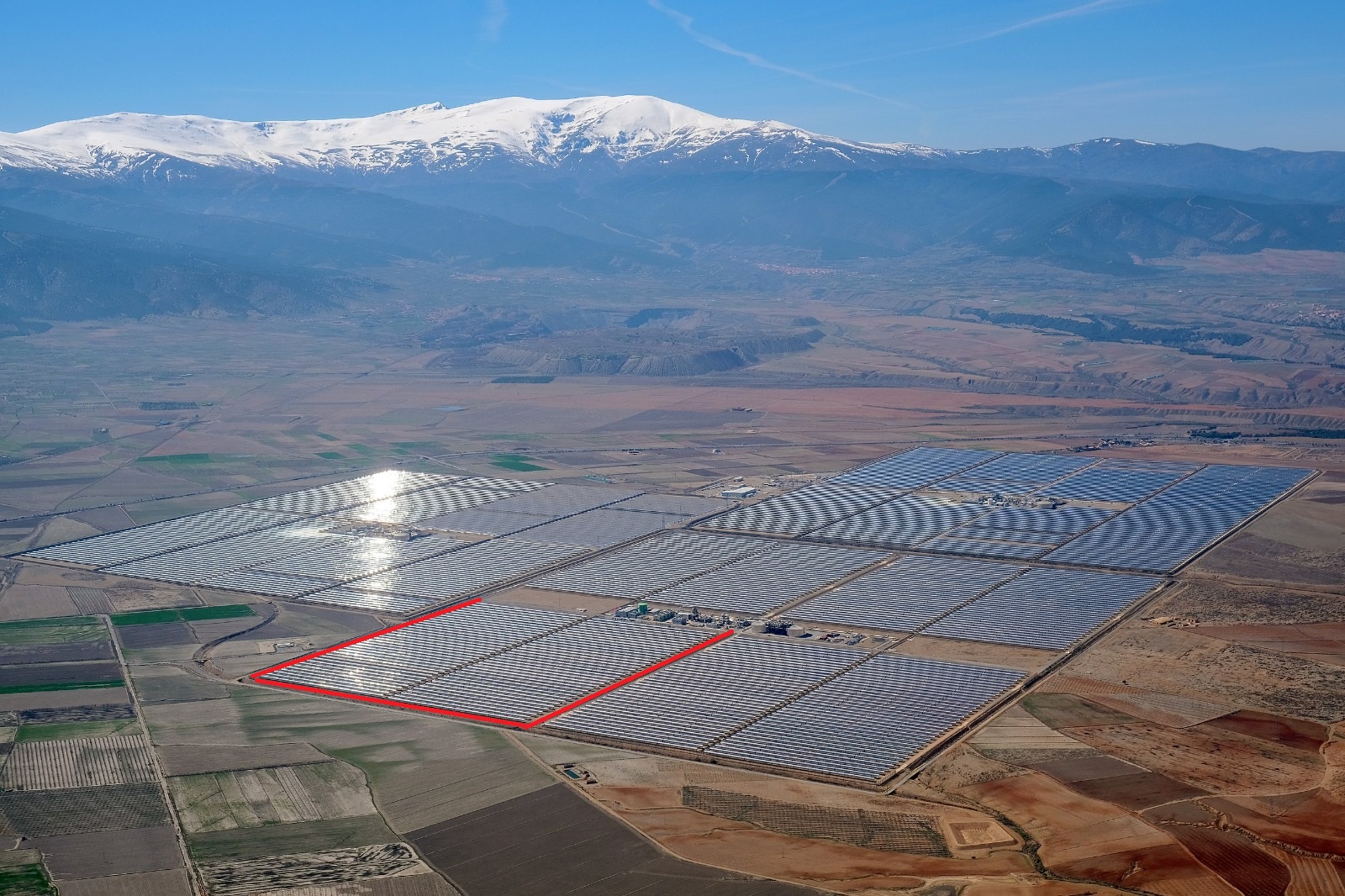
Picture 1: Andasol 3 in the foreground with a red rectangle of the visited sector, Andasol 2 to its left and Andasol 1 in the background

The tour started with a drive around the block circled in red above. Toni Fersini, the CEO of FersiSolar and the engineering director of the construction of the solar field, joined the attendees of the conference and touched on some of the intricacies of how such a field works.

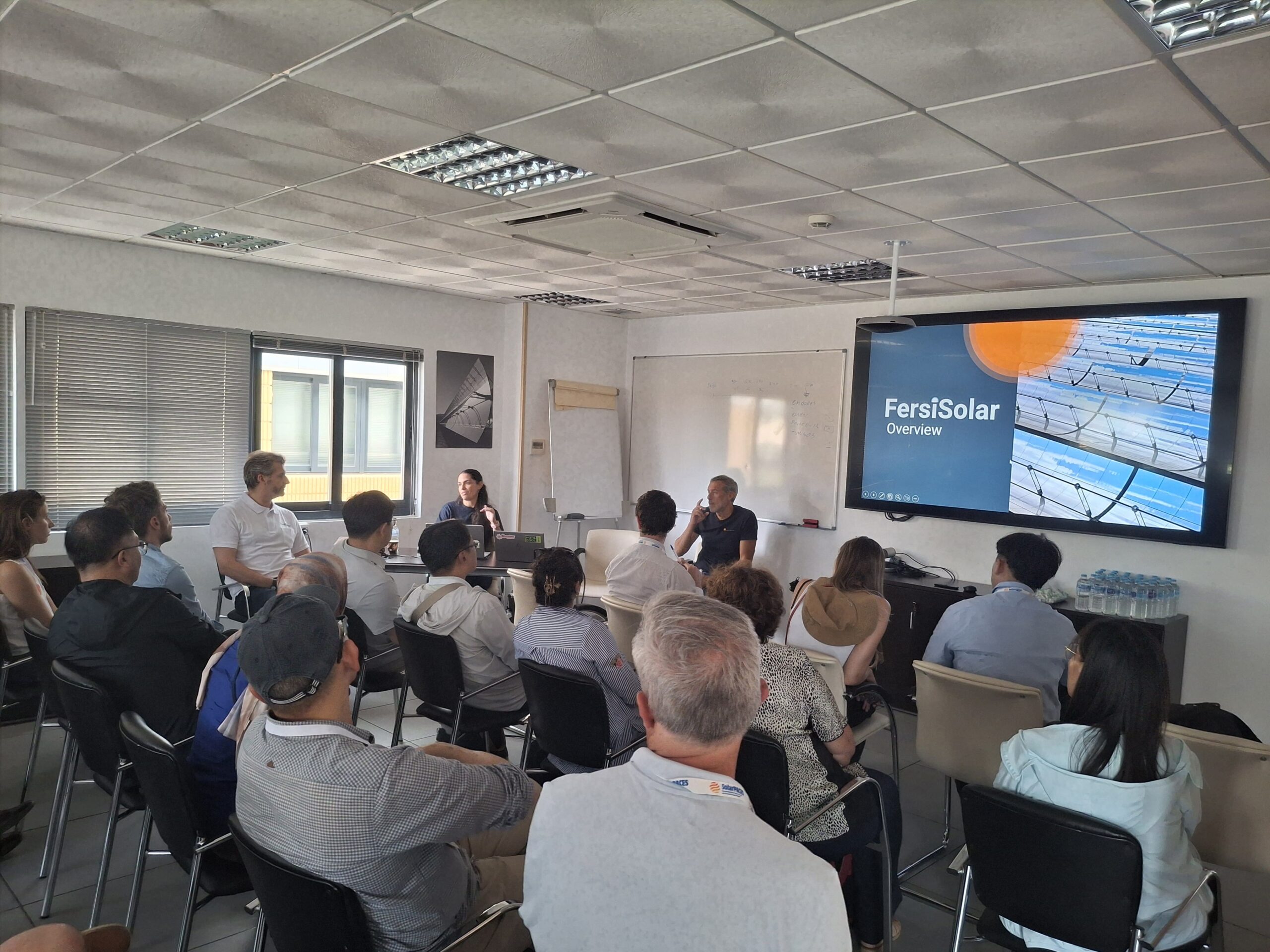
Picture 2: Presentation in the meeting room

After that, the visit continued with a presentation by Marquesado Solar on how they operate the power plant. The participants had the opportunity to ask questions directly to one of the plant engineers, which resulted in a lively discussion about the practices adopted by Marquesado, as well as the challenges that solar thermal power plants face in Spain.

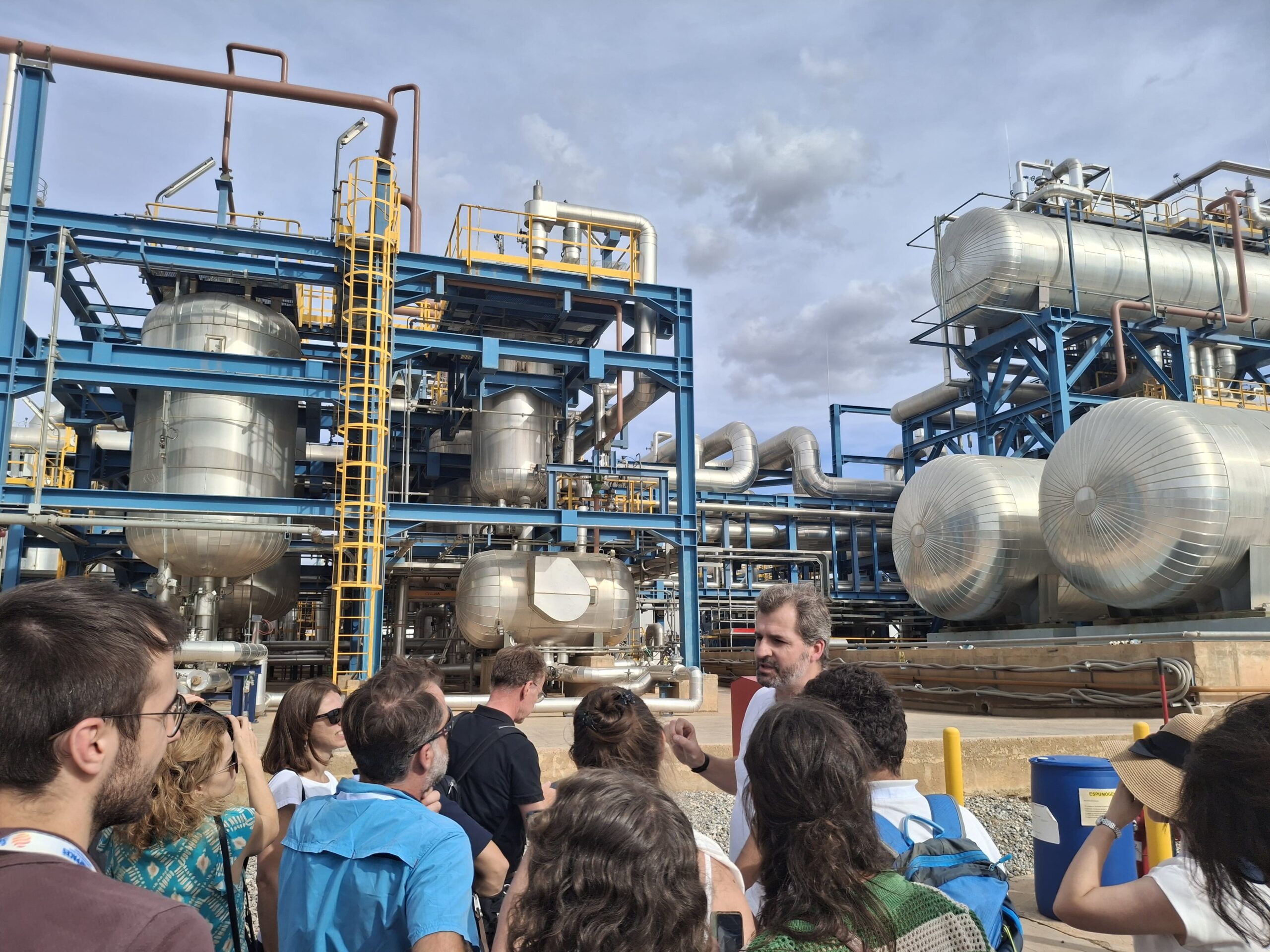
Picture 3: Christiaan explaining the design of the ullage system (left) and the HTF expansion tanks (right)

Lastly, the tour ended with a walk around the power block, where Christiaan Bartels-Mijnhart explained the role and design of different components, like the ullage system for heat transfer fluid, the heat exchangers of the molten salt thermal energy storage, and the gas boilers used to maintain the temperature of the thermal oil.

About Andasol 3

Andasol 3 is a 50 MW parabolic trough solar thermal power plant located near Aldeire and La Calahorra in Granada, Spain. Its solar field covers about 500,000 m² with parabolic mirrors that concentrate sunlight to heat a thermal oil circuit. It has four subfields of collectors oriented along a north-south axis. Energy is stored in 29,000 tons of molten salt, enabling the plant to operate at full capacity for over seven hours after sunset. The plant was constructed between 2008 and 2011 next to the Andasol 1 and Andasol 2 power plants and provides employment for about 50 people since then. Situated at an altitude of 1,100 meters, with abundant solar irradiation, access to Sierra Nevada cooling water, and a nearby electric substation, Andasol 3 remains a benchmark in CSP with storage.

About SolarPACES

SolarPACES (Solar Power and Chemical Energy Systems) is an international network founded in 1977. Its membership comprises research institutions, industry stakeholders, and policy experts working to advance CSP technologies, so they become cost-competitive, reliable, and deliver a dispatchable form of clean energy. SolarPACES coordinates global R&D efforts, publishes strategic studies, and provides guidance to policy makers to reduce the risks in project development. While the organization has historically been focused on generating electricity with CSP, it is increasingly emphasizing high temperature concentrating solar thermal (CST) for industrial heat, and solar thermochemistry for fuels production.

This pivot is occurring as part of a growing recognition that the decarbonization of heat consumption is the next frontier of the energy transition. Industrial heat consumption is an especially thorny subject, as companies are particularly sensitive to the cost of thier inputs, energy included. As 16% of the total final energy consumption of the EU is dedicated to heat production in industries, governments and engineers are hard pressed to offer an alternative to natural gas that can simultaneously reduce emissions and ensure competitiveness. In this context, CST is emerging as a key solution for eco-friendly thermal generation in the industrial sector. It can deliver heat for decades with a stable and predictable cost, shielding its user from the fluctuations of fossil fuel markets.