Concentrated Solar Thermal Energy Guide

The decarbonization of industry represents one of the major challenges of the energy transition. Heat is at the heart of this challenge: two-thirds of annual energy consumption in industries in the European Union is used for process heat. At present, the vast majority of this consumption is supplied by fossil fuels, with natural gas playing a central role.
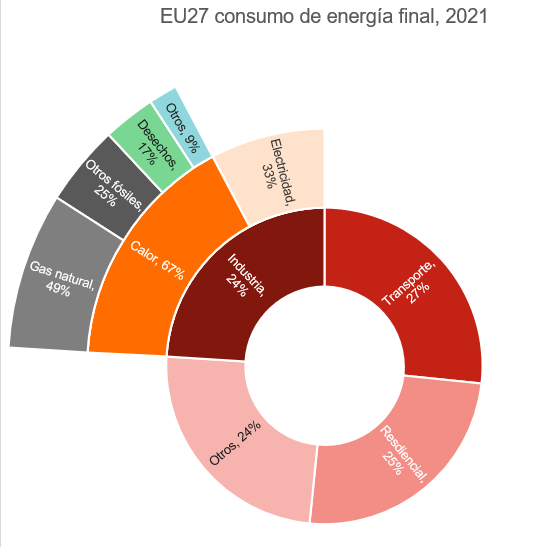
Figure 1: Final energy consumption in the EU in 2021. Source: World Energy Balance 2022, IEA
With the aim of promoting the deployment of technologies that can change this situation, the Institute for Energy Diversification and Saving (IDAE) has published the “Guide to Concentrated Solar Thermal Energy for Industrial Processes”. This document provides detailed and relevant information on concentrated solar thermal energy technology, particularly aimed at industrial users seeking sustainable and efficient alternatives for their medium- and high-temperature, energy-intensive processes (100–400°C). In this blog, we summarize the most important information from the Guide.
The Role of the Technology
Concentrated solar thermal (CST) energy is emerging as one of the most attractive solutions for meeting industrial thermal demand. It is a proven technology capable of supplying renewable heat in a stable and competitive way, integrating robustly into industrial processes through the use of thermal energy storage, ensuring operational continuity and reducing dependence on fossil fuels.
Sectors and Processes of Interest
CST is particularly well suited to industries requiring heat in the medium-temperature range (100–400°C).
- In the food and beverage sector, for example, it can be integrated into processes such as drying, pasteurization, sterilization, and industrial frying.
- In the chemical and plastics industries, CST can cover synthesis, distillation, extrusion, and polymer molding.
- The textile sector, which is heat-intensive for dyeing, drying, and fabric finishing, can also find a realistic and scalable alternative in CST.
- Mining and construction materials, with processes such as mineral drying and gypsum kilns, represent sectors with high thermal demand and available space for solar installations.
The industrial processes of greatest interest for CST include steam and hot water production, drying treatments, and separation processes. A key aspect is thermal energy storage, which makes CST a competitive option compared with alternatives such as photovoltaics, as it ensures thermal supply at night or during cloudy periods. This is particularly valuable for factories operating continuously or with stable thermal loads.
Other Technologies for Decarbonization
When comparing the different decarbonization options available for industrial processes in the 100–400°C range, the conclusion is clear. Biomass can provide heat, but it raises significant environmental concerns: it competes with biodiversity, generates air pollution, and also emits greenhouse gases in the present that must be reabsorbed through the growth of new forests in the future. Industrial heat pumps, meanwhile, although highly promising, still do not have commercial solutions capable of reaching these temperatures and currently supply heat only up to 150°C.
Electric boilers powered by self-consumption photovoltaics are the only real alternative to solar thermal with a competitive price, due to the low cost of photovoltaic modules and the possibility of participating in ancillary services markets for the electricity grid. However, solar thermal also has its advantages, foremost among them lower land requirements.
Against this backdrop, concentrated solar thermal energy offers a robust proposition: renewable, continuous heat, with a price that depends on the…
Institutional Recognition of the Technology
Thanks to these advantageous characteristics, institutional support for CST is growing significantly in Spain. Among the most important programs and initiatives are the following:
- The Energy Saving Certificate (CAE) system, which allows the energy savings achieved through solar thermal installations to be monetized, generating an additional revenue stream that improves project profitability. A specific measure for the technology is expected to be published; it is currently under development.
- The Recovery, Transformation and Resilience Plan includes specific funding for renewable heat projects in industry, with an emphasis on integrating solutions such as CST.
- European Regional Development Fund (ERDF) funds for 2021–2027 also support renewable energy investments in regions with high potential, opening the door to scalable projects beyond the pilot phase.
- The LIFE Programme, in turn, finances innovation and demonstration projects that are essential for validating novel applications in specific industrial sectors.
Alongside institutional support, the economic model has also evolved. The Heat as a Service (HaaS) model is emerging as a transformative element, as it removes the initial investment barrier for industrial customers. Under this model, the customer does not purchase the plant but pays only for the heat consumed. In this way, the technology and operational risk is assumed by the service provider, while the beneficiary company obtains renewable heat at stable and predictable prices. This approach is particularly attractive in a context of high gas and electricity price volatility, as it provides economic certainty and competitiveness. It also allows small and medium-sized industries, which under other circumstances might not be able to afford an investment in CST, to access the benefits of the technology.
Conclusion
In conclusion, decarbonizing industrial heat in the 100–400°C range is an important challenge in the energy transition. The options are limited: biomass, with its environmental impacts; electrification through electric boilers, which are competitive but dependent on electricity prices and more land-intensive due to the photovoltaic generation required; and, finally, concentrated solar thermal energy. Among these options, CST stands out as the most mature, competitive, and scalable. It provides renewable and continuous heat thanks to thermal storage, can be adapted to multiple industrial sectors, benefits from growing institutional support, and offers innovative business models such as Heat as a Service, which reduce barriers to entry and facilitate widespread adoption.
Spain, with its exceptional solar resource and supportive institutional framework, has the opportunity to position itself at the forefront of this transformation and lead the decarbonization of industrial heat in Europe.


