

Calor renovable en la industria de pinturas: un caso práctico

Renewable Heat in the Paint Industry: A Case Study
Integrating concentrated solar thermal (CST) energy as a source of industrial heat in a paint manufacturing plant represents a viable solution for moving toward a zero-emission paint industry. In this project, we studied the feasibility of implementing a concentrated solar thermal field capable of supplying industrial hot air at 200°C using solar energy, covering a large share of the process’s thermal demand.
This type of solution enables the decarbonization of industrial thermal processes and offers a competitive alternative, with a levelized cost of heat (LCOH) of approximately €20/MWh. This clearly demonstrates the economic viability of concentrated solar thermal heat in sectors with high thermal demand, such as paint manufacturing. We not only promote energy savings but also improve the client’s economic outlook.
How does this work in practice? The most important ingredients in paint production are:
- Resin – binds the other components together and gives the paint its adhesive properties.
- Solvent – acts as a carrier for the other components. As the paint dries, the solvent evaporates and the solution solidifies.
- Pigment – gives the paint its color.
- Additives – make the paint easier to use and provide various useful properties, such as faster drying and resistance to cracking and abrasion.
From an energy perspective, resin is the most important of these ingredients. Its production involves several processes that require hot air and hot water at approximately 200°C and 80°C, respectively, for drying operations. Below, we show how these processes can be decarbonized.
How Is Concentrated Solar Thermal Heat Generated for Paint Manufacturing?
We start with heat generation, using parabolic trough collectors (PTCs). We have already discussed how they operate in a previous article (here), so we will not go into detail again. What matters is that water enters the solar field at approximately 122°C and is heated to 245°C, economically supplying around 70% of the plant’s annual heat demand. The remaining 30% can be supplied by an electric boiler to complete the decarbonization process or by the natural gas boiler already installed at the factory.
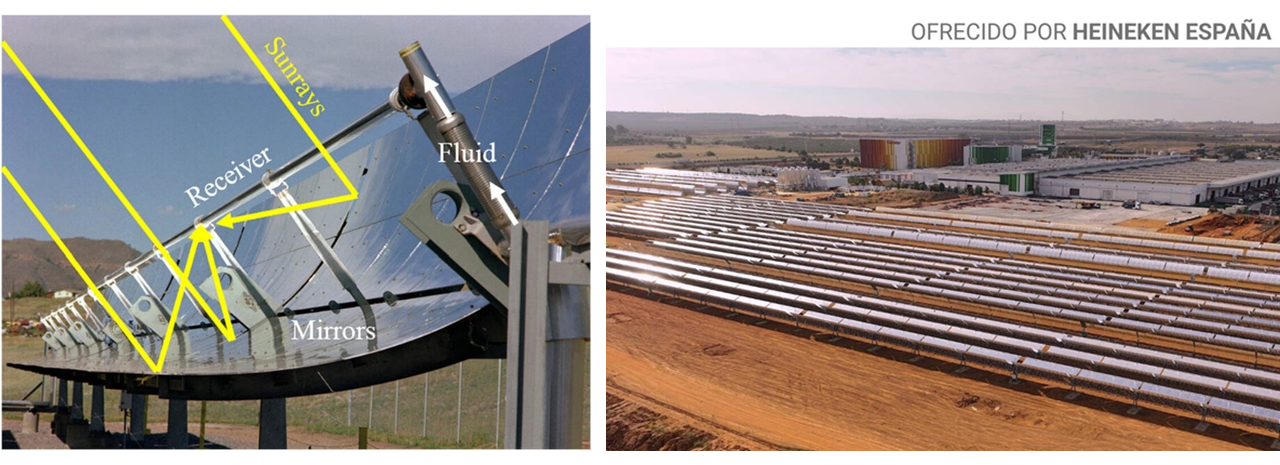
Figure 1: Parabolic trough collectors
How Is Concentrated Solar Thermal Heat Stored to Maintain Production?
Thanks to the thermal energy storage (TES) system, it is possible to ensure 24/7 operation and process continuity, even when sunlight is unavailable. In this case, the client’s thermal demand is relatively low (56 GWh/year), allowing the installation of a TES system with a thermocline tank.
This technology uses a single tank containing both the hot water coming from the concentrated solar thermal field and the cooler water awaiting reheating. The two have different densities due to their temperature differences, allowing them to remain separated. A layer called the thermocline forms between the hot and cold sections of the tank, characterized by a pronounced temperature gradient (Figure 2).
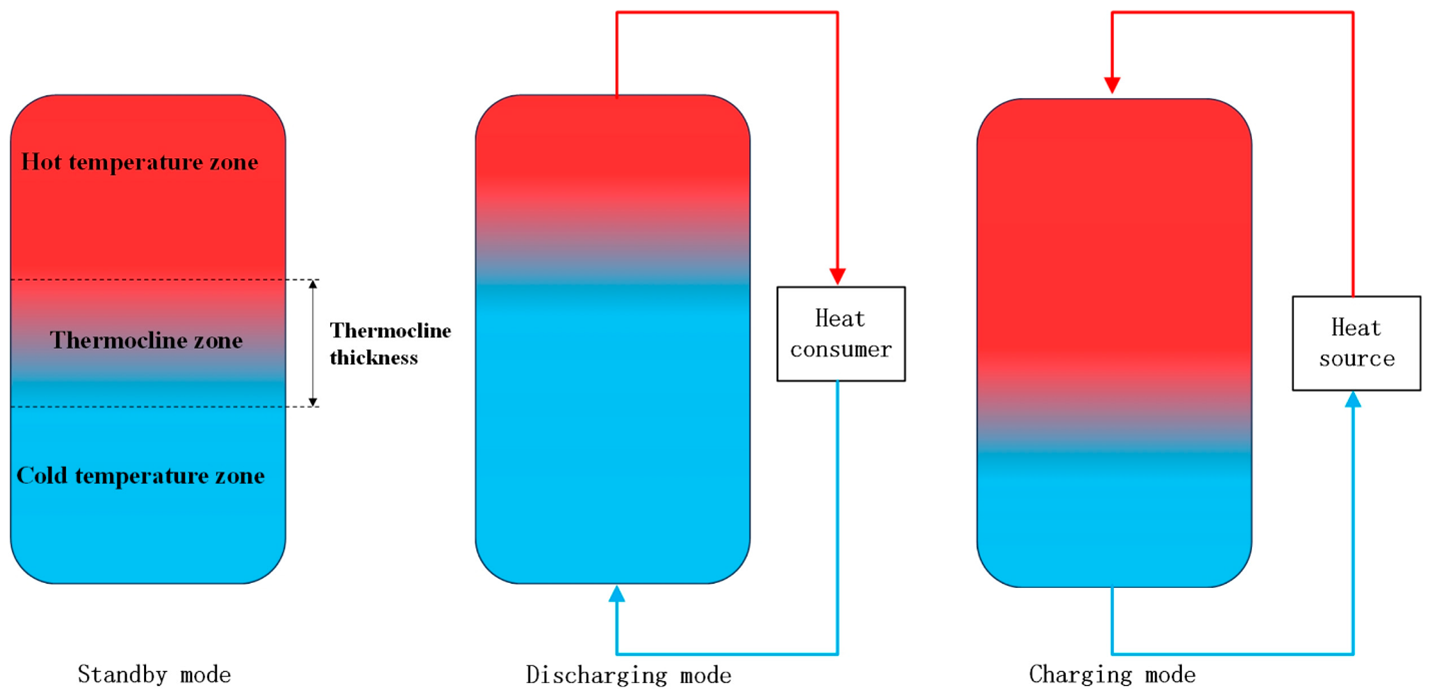
Figure 2: Operation of a thermocline storage tank
The tank’s piping is arranged to reinforce this separation. During charging, hot water enters through the top of the tank and remains there because of its lower density. During discharge, the cooler water that has transferred its energy to the client enters through the bottom of the tank and stays there due to its higher density. The diagram above illustrates these operating modes.
Thermocline tank systems offer a clear economic advantage over two-tank storage systems. They require fewer tanks and associated piping, resulting in lower costs. Their main disadvantage is that they provide less precise control over outlet temperatures. They also have a practical size limitation: beyond certain dimensions, maintaining a well-defined and stable thermocline layer becomes technically challenging due to fluid dynamics and heat diffusion effects.
How Is Heat Delivered to Industrial Processes?
To supply hot air to the client, we need to cool the water leaving the concentrated solar thermal field and transfer its energy to the air. For this purpose, we use a heat exchanger.
Finned coil heat exchangers are particularly efficient for this application because of their large heat transfer surface area. The heat exchanger consists of tubes through which hot water flows (Figure 3, right). These tubes have metal fins that increase their surface area and improve heat transfer to the air.
The entire tube assembly is mounted in a unit with protective grilles to reduce fouling of the fins. The illustration below clearly shows the two pairs of fluid inlets and outlets (the four pipes at the corners of the heat exchanger) and the grille behind them.
Large fans generate an airflow that passes perpendicular to the tubes through a series of heat exchangers like this one. Air enters at ambient temperature on one side and exits at 200°C on the other.
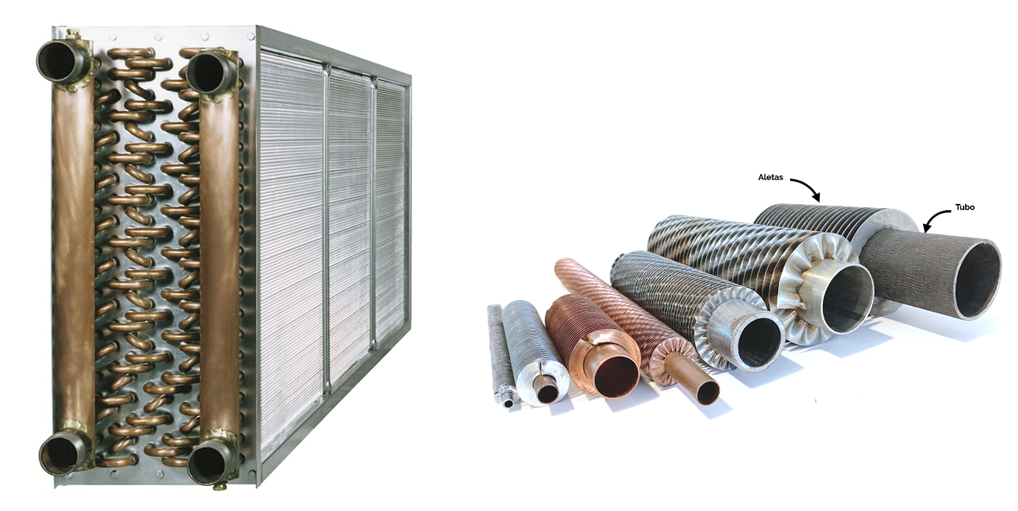
Figure 3: Finned heat exchanger tubes (right) and complete heat exchanger (left)
The water leaving the coil is still relatively hot and contains a significant amount of thermal energy. To recover this heat, a shell-and-tube heat exchanger can be used (Figure 4).
In this system, hot water flows through either the tubes or the shell, while another water circuit (the one we want to heat) flows through the opposite side. Heat is transferred through the tube walls without mixing the fluids, efficiently heating a second water loop for other uses within the plant. Once the heat has been extracted, the water returns through a return line to repeat the cycle.
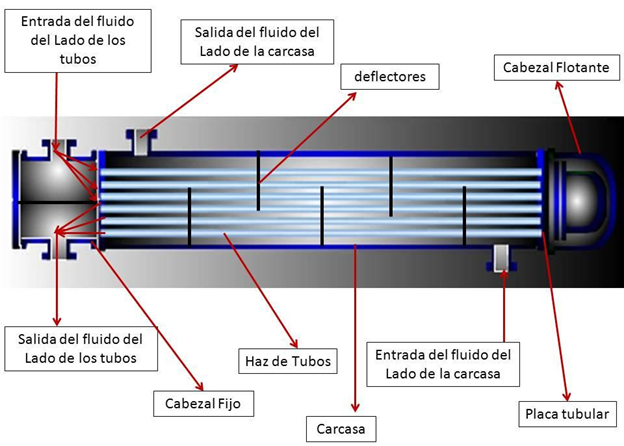
Figure 4: Shell-and-tube heat exchanger
What Are the Advantages of a Closed-Loop Water System in a Concentrated Solar Thermal Plant?
After transferring its heat to the client, the cooler water (at least in the context of this system) returns to the thermocline tank to await its next cycle.
In this case, the concentrated solar thermal system operates in a closed loop. This means that water circulates only between the solar field, the storage tank, and the heat exchangers serving the client, without leaving the system.
Because the system requires water with specific properties and could not operate safely using untreated water directly from the supply network, a closed-loop configuration offers significant advantages. The initial volume of water only needs to be treated once, and small amounts of makeup water are required only to compensate for losses. This significantly reduces water treatment and desalination costs, as well as the need for ongoing water chemistry control.
And that is how this type of system works to produce hot air with thermal energy storage. We have achieved 70% solar coverage of the plant’s thermal demand, positioning clients as pioneers in decarbonizing both the paint industry and the broader chemical sector.
At FersiSolar, we know how to design, build, and operate these plants and help you decarbonize your industrial heat consumption. The time to take climate action is now, and the solution already exists. Contact us.


