Types of Sensible Thermal Energy Storage for Industry: Which One Fits Your Facility?
1. What Are We Talking About (and What Is Outside the Scope)?
Thermal Energy Storage (TES) is becoming an increasingly common component of solar thermal energy systems for industry. By making it possible to store heat generated during periods of high solar irradiation and use it when needed, TES helps reduce dependence on fossil fuels, increase the utilization of the solar field, and provide a more stable energy supply.
However, “energy storage” is a very broad term. In this article, we will focus exclusively on thermal energy storage, i.e., systems that store heat for use in industrial processes.
There are three main types of Thermal Energy Storage (TES): Sensible Heat Storage (SHS), which stores energy by increasing the temperature of the storage medium and is the type addressed in this article; Latent Heat Storage (LHS), which harnesses the energy associated with a phase change of the material, typically from solid to liquid, using a Phase Change Material (PCM); and Thermochemical Energy Storage (TCES), in which energy is stored through a reversible chemical reaction.
We will not cover electrical energy storage using batteries (BESS) or other applications, such as district heating networks or systems intended for buildings.
We will also limit the scope to the storage technologies most relevant to concentrated solar thermal (CST/SHIP) industrial installations, particularly those integrated with parabolic trough and Fresnel collectors. Other configurations and applications exist within thermal energy storage, but they address different temperature ranges, levels of technological maturity, or integration requirements.
The aim is not to analyze each technology in depth, but to help understand the factors that influence their selection. At the end of the article, you will find a comparative table summarizing the main characteristics of each option to facilitate an initial selection. If you want to explore a specific technology in greater depth, you will find links to other articles where we discuss it in more detail.
2. Why Incorporate Thermal Energy Storage (TES)?
Solar thermal energy makes it possible to replace part of fossil fuel consumption with a renewable energy source with no direct emissions during operation. However, solar resource availability does not always coincide with industrial process demand. In many facilities, thermal demand continues in the evening, at night, or during periods of lower irradiation, when the solar field can no longer supply all the energy required.
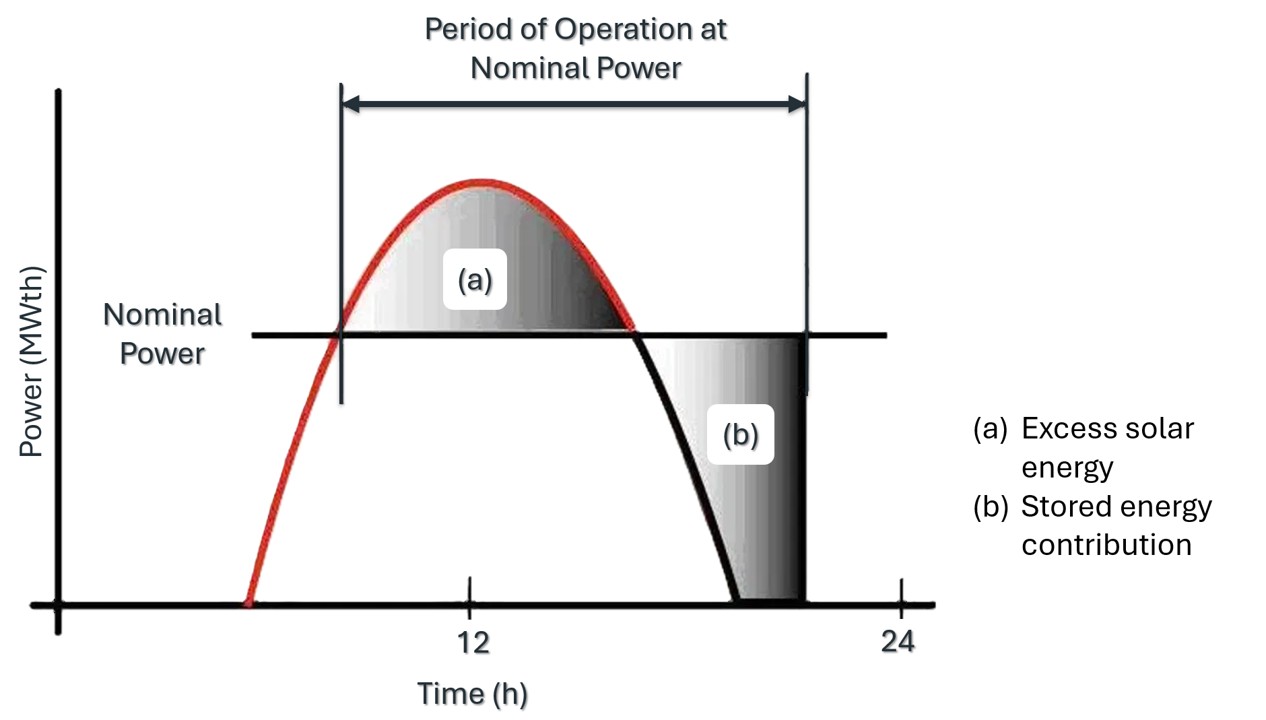
By storing heat produced during periods of high irradiation and releasing it later, TES makes it possible to shift energy over time and increase the utilization of the solar field. Instead of limiting the use of solar energy to daylight hours, the process can use that heat when it actually needs it.
A properly sized storage system can reduce conventional fuel consumption, increase the solar fraction of the plant, provide a more stable energy supply, and facilitate the operation of continuous industrial processes or processes with demand outside irradiation hours.
Incorporating storage is not simply a matter of adding more capacity. The technology selected, its size, and its integration with the industrial process all affect both the technical performance and the economic viability of the investment. Two facilities with similar total thermal demand may require very different solutions depending on their operating temperature, consumption profile, available space, or decarbonization strategy.
Figure 1. Example of (a) excess solar energy and (b) stored energy contribution over the course of a day.
3. There Is No One-Size-Fits-All Technology
Before comparing technologies, it is important to understand that there is no industrial thermal energy storage system that is the best option for every project – it depends on the specifications of each facility.
Process temperature is usually the first selection criterion, as it determines which materials and configurations can be used. However, it is rarely the only one. Other factors include the required storage hours, thermal demand profile, available space, integration with the existing facility, operating strategy, maintenance requirements, temperature difference between charging and discharging, efficiency, and budget.
In addition, different technologies have different levels of commercial maturity. Some have been used in industrial applications for several decades, while others are still evolving and offer promising characteristics, although with less widespread deployment.
The following table summarizes the main thermal energy storage technologies used in low-, medium-, and high-temperature industrial heat applications and compares the factors that typically determine their selection.
4. Comparative Table of TES Technologies
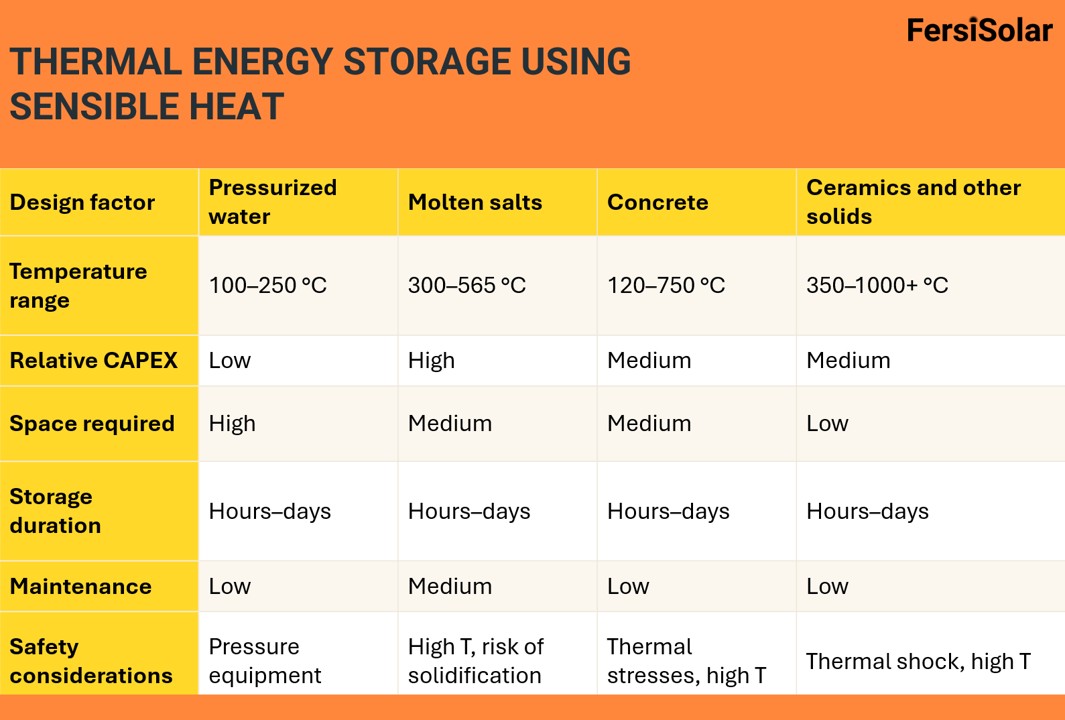
Table 1 summarizes the main industrial thermal energy storage technologies currently used in industrial applications where steam or heat could be supplied through concentrated solar thermal (CST) energy. Its purpose is to provide a quick comparison of the factors that typically influence their selection.
The comparison focuses on the technologies with the greatest commercial deployment in this type of project. The values are indicative and should be interpreted as a guide for an initial assessment.
Table 1. Comparison of Thermal Energy Storage (TES) Technologies for Industrial Applications
5. How to Interpret the Table
The table makes it possible to quickly identify which technologies are worth considering and which are unlikely to be suitable for a given industrial thermal energy storage application. It does not replace engineering design, but it does help narrow down the alternatives from the outset.
It is common for one technology to stand out because of its suitability for a particular temperature range, another because of its relatively low cost or level of maturity and commercialization, and another because of its ease of integration.
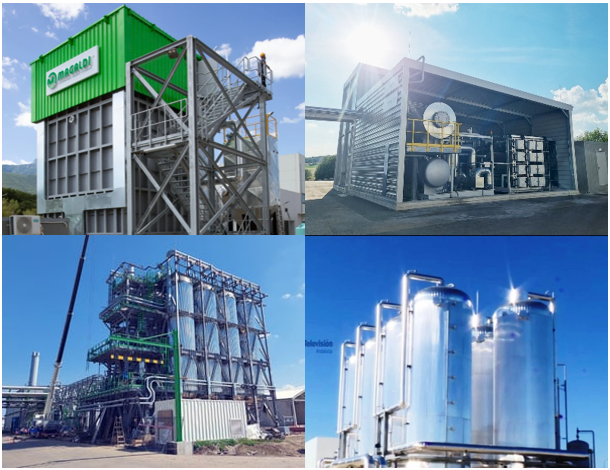
Figure 2. Four types of sensible heat storage. From left to right: (a) Magaldi Green Thermal Energy Storage based on fluidized sand-bed technology; (b) ENERGYNEST ThermalBattery™ concrete-based thermal energy storage; (c) Kyoto Group Heatcube using molten salts; (d) pressurized water thermal energy storage.
If you want to explore any of these technologies or topics in greater depth, you can consult our articles on Industrial Thermal Energy Storage – Part I, Industrial Thermal Energy Storage – Part II, Ceramic Thermal Energy Storage, and Nighttime Solar Electricity: Hybrid CSP Plants with Thermal Storage.
Conclusion
Thermal energy storage can increase the utilization of solar energy and provide greater flexibility to an industrial facility, contributing to the decarbonization of industrial heat. The most suitable technology will depend on factors such as process temperature, demand profile, available space, and integration with the solar field.
The table presented in this article is intended to serve as an initial reference for comparing the main alternatives and identifying which ones are worth considering for each project.
At FersiSolar, we help industrial companies design and integrate thermal energy storage systems for new installations and existing concentrated solar thermal plants. If you are considering incorporating TES into your process, we can help you assess the different alternatives and select the solution that best fits your facility and objectives.
Noticias anteriores
Can Concentrated Solar Thermal Cooling Reduce Electricity Use in Industrial Refrigeration?